
INTRODUCTION
With the increase in life expectancy and the epidemiological transition of the population in several countries, there was a need for a more adequate record of functionality and disability, establishing a unique and appropriate language among professionals. In this sense, in 2001, the International Classification of Functionality, Disability and Health (ICF) proposed by the World Health Organization (WHO)1,2 is created. The ICF is based on the biopsychosocial and spiritual model, in which functionality is considered to be influenced by multiple factors, that is, it has a multidimensional characteristic. Thus, in this model, the components of body functions and structures are related to the activity and participation component, as well as to environmental and personal factors, providing a broader and more adequate view of the state of functionality or disability that the individual is in3,4.
The ICF presents categories that describe the situation of each individual, within the health domains or health-related domains5. To classify, an alphanumeric system is used that codes health-related conditions, accompanied by qualifiers, a number that completes each category and which quantifies through a generic scale, allowing the quantification of the degree of deficiency, limitation, or restriction5,6.
Among the various professionals who have already adopted the use of ICF in their clinical practices, the physiotherapist stands out, who is the professional responsible for the prevention and promotion of health, in addition to the functional recovery of individuals after illness or injury7,8. It is important to remember that the ICF, like the International Statistical Classification of Diseases and Related Health Problems (ICD), is a classification system and, therefore, does not replace the assessment process that each professional does with his patient. After using specific tests, questionnaires, and/or various assessment instruments, the physiotherapist, for example, can then classify the categories he finds relevant to the case when considering the ICF. The main impact of this approach, which considers the multiple factors that influence functionality, is that, as a result, the treatment and care plan will not be restricted to the disease or its absence, but directed to the individual's functional state3.
Functionality is one of the health indicators in the population aging process, which represents an interaction of several functions that will allow the performance of daily activities and the social and community participation of the elderly. The human organism undergoes a natural process of wear and aging, promoting in the elderly, damage to the components of postural control, functional changes, and deficiency in body balance9,10,11.
When the elderly have a deficient balance, they reduce their activities of daily living due to fear of falls, injuries, and immobility, leading them to impaired functional independence, an important indicator for the level of activity and participation of this population12,13.
Balance is controlled by the integration of the central nervous system, vision, tactile sensitivity, proprioceptive system, and vestibular system13-15. To obtain balance, an individual seeks to maintain his body mass center within the limits of stability, being determined by the ability to control posture without changing the support base, remaining standing in an orthostatic position.
Among the various assessment instruments available for the physiotherapists, it is important to distinguish which component of the ICF each one relates to, the majority of which are focused on the function and structure of the body, and few are directed to the activity and participation component. Several authors have developed and tested tools that are capable of assessing static and dynamic balance, among which we can mention the Berg balance scale16,17, being validated in Brazil, as a reliable and widely used instrument for functional assessment of balance capacity in individuals over 60 years of age18.
Another way to assess stability and body balance is through stabilometry19-21, which is considered a gold standard exam for assessing static balance and postural control22. In stabilometry, body oscillations are quantified while the individual remains standing on a force platform. When there is a displacement of the center of pressure, that is, the point resulting from the forces (sum between the actions of postural control and gravity) applied on the support surface of the stabilometric examination, there is a record of oscillations according to the individual's position in the anteroposterior and lateral-lateral directions23,24,25.
The aim of this study was to correlate the assessment obtained from two balance tests, commonly used by the physiotherapist, the Berg balance scale, and the stabilometry with ICF categories.
METHODS
This is an observational and cross-sectional study, performed in May 2018, at the School Clinics of Physiotherapy of Hospital Maternidade Terezinha de Jesus (HMTJ) in the city of Juiz de Fora, Minas Gerais state, approved by the Ethics and Research Committee under no. 80671417.0.0000.5103. It consisted of a convenience and a non-probabilistic sample consisting of 28 elderly individuals who met the previously established selection criteria.
Inclusion criteria were individuals aged ≥ 60 years, of both genders, able to understand simple verbal commands, and may have a corrected visual problem. Volunteers with sensory, cognitive, or physical disabilities were excluded, including vestibular dysfunctions, volunteers who use walking aids and unable to stand independently, as well as elderly people with amputation or fracture of the upper and/or lower limbs, foot injuries, which prevented the performance of the body balance assessment.
The collection was performed in three stages. Initially, the volunteers recruited and who agreed to participate in the study by signing the Free and Informed Consent Form (ICF) were submitted to anamnesis to record socio-demographic data. Then, anthropometric records of their height and body mass were made using a Welmy scale model W200®.
Subsequently, the volunteers were evaluated according to the Berg balance scale, which evaluates balance during the performance of activities or functional tasks26. Each activity present on the Berg scale can be categorized by the ICF and identified by an alphanumeric code, then the following categories are considered within the Berg scale: sitting position for standing position (d4103), standing without support (d4154), remaining sitting without support (d4153), standing to sitting position (d4104), transferring from one chair to another (d4200), staying in a standing position with your eyes closed for two minutes (d4158), standing with your feet together (d4158), standing, reaching an object located in front of you (d4452), standing, picking up an object from the floor (d4105), turning to look back (d4106), rotating 360 degrees (d429), switching feet on the stool (d4551), remain standing with one foot forward (d4158) and remain in unipodal support (d4158)20.
Based on 14 common activities of daily living27, these are scored on a scale ranging from 0 to 4 according to the capacity or time needed to perform the task28, in which 0 indicates an inability or maximum dependence on help to complete the task, and 4 points to full capacity24. The maximum score of the Berg test reaches 56 points and, if the final score is below 45, it is a sign of the risk of falls29.
Finally, the volunteers were assessed through stabilometry, using the Podaly® S-plate baropodometer. From the oscillations detected by the force platform, the displacement of the pressure center in the anteroposterior and laterolateral directions of the volunteers was recorded, following the recommendations for data collection of the equipment22,23. For about 30 seconds, each volunteer remained in the bipedal orthostatic position, barefoot, with their arms along the body, with a distance of two centimeters between the heels and feet 30 degrees apart, in addition to the stare and a visual target30,31 .
The categories that refer to the activity and participation component can be classified with two qualifiers, with the first qualifier referring to performance and the second, capacity. In this study, we chose to classify only the capacity of the volunteers regarding the category d4154, which represents the ability to remain standing and is present in the two chosen balance tests. This choice was based on the fact that the ability to represent that the individual was able to perform such activity in the absence of environmental factors, that is, in a standardized environment2,3,5. In addition, the possible scores obtained on the Berg Scale considering the activity of standing, as well as the variations concerning area, length, and average speed obtained in the stabilometry were categorized in relation to the ICF qualifiers.
All analyzes were performed using the GraphPad Prism 5 software (2015), adopting a significance level of 5%. Initially, for data analysis, normality and homoscedasticity of the distribution were tested, validating the use of non-parametric statistics. Data were presented as mean ± standard deviation for descriptive statistics. To correlate the variables of the stabilometer with the BERG scale classified by the ICF, we used Spearman's non-parametric correlation test.
RESULTS
The recruitment of volunteers resulted in the collection of data from 28 elderly people, assessed using the Berg balance scale and stabilometry, with the scores obtained in the activity of "standing upright" (d4154) present in the two correlated tests below, with the qualifiers of the ICF.
Table 1 describes the characteristics of the sample and shows that it was composed of elderly people who, on average, did not present overweight (26.56 ± 3.75 kg/m2) and had a good body balance on the Berg scale (52.2 ± 4.4).
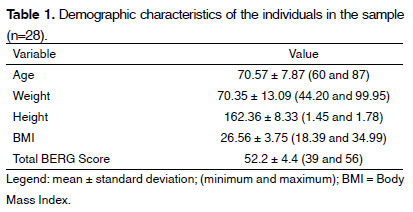
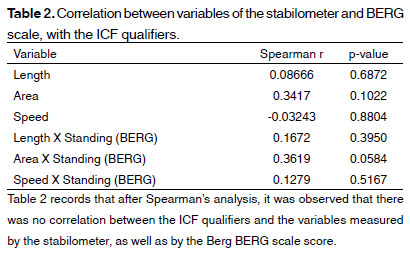
Table 2 records that after Spearman's analysis, it was observed that there was no correlation between the ICF qualifiers and the variables measured by the stabilometer, as well as by the Berg BERG scale score.
Considering the stabilometric analysis, the analysis showed that the sample was heterogeneous, with individuals showing no difficulty until complete difficulty in performing the d4154 activity. The analysis of the scores obtained by the volunteers on the BERG scale showed a more homogeneous sample, with no mild or mild difficulty (Figure 1).
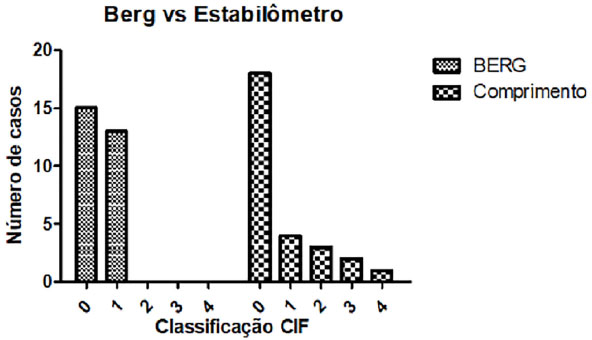
Figure 1. Graphic graph of the frequency of distribution.
DISCUSSION
The aim of this study was to observe whether the ICF qualifiers used to classify standing activity correlated with two instruments commonly used to assess balance in the elderly. The main finding found was that in the assessed sample, there was no correlation between the stabilometric variables and the score obtained on the Berg balance scale.
In the evaluated sample, it was observed that considering the Berg scores, there was a predominance of qualifiers 0 and 1, representing that the volunteers presented no difficulty to light difficulty, respectively. However, when considering the results of stabilometry, regardless of the variable analyzed, there was a wide variation in the qualifiers, which ranged from 0 to 4. In view of this, it is demonstrated that the same individuals evaluated by Berg and by stabilometry show divergent results.
For Dilek Keskin et al. (2008)34, body balance can be assessed by functional and laboratory tests. Functional tests do not require high financial investment, but they require specific training for their application, as they are subjective and may suffer external influence. Silva et al. (2009)35, on the other hand, report that laboratory tests evaluate each variable in more detail, taking as an example the use of the force platform, which quantifies body oscillations in an objective way, offering greater precision in the evaluation, despite requiring higher cost for acquisition. However, they are able to more adequately detect the impairment presented by each individual, corroborating our findings, since the stabilometric analysis showed a greater diversity of qualifiers, confirming different degrees of difficulty in performing the task of standing when compared to those of the BERG scale.
To date, we can say that no studies have been found in the literature that include Berg's Balance Scale and stabilometry, being classified by the ICF. The main issue when using the ICF concerns its wide approach and the greatness of codes3,4,30, in which it is necessary to verify whether the issues evaluated by the instruments already existing in clinical practice are contained in the ICF domains, thus establishing the relationship between the tools presented31.
It is important to highlight that the ICF is not an assessment tool, but a classification of the functional status of an individual. Its use does not replace the assessment made by the instruments commonly used in the clinical practice of professionals. Thus, it is important to identify which component of the ICF a given assessment instrument is related to and the choice of the category to be classified by the physiotherapist will depend on the analysis of all components related to functionality and observed in the case8.
In a study by Santos et al., (2011)38, whose aim was to evaluate the predictive values for the risk of falling in elderly practitioners and non-practitioners of physical activity through the use of the Berg scale, it was found that the elderly who did not practice physical activities had a cut-off point of 49, suggesting that the scale is sensitive to the particularities of the sample, which is in line with our findings, which presents an average of 52.2 in Berg's total score. However, Berg showed little sensitivity regarding the group that practiced physical activity regularly. Therefore, the use of other scales is indicated to assess the risk of falls in elderly people who practice physical activities.
Batista et al., (2014)20, investigated the influence of the length of stay in a nursing home on postural balance and risk of falls, comparing elderly people who remained institutionalized for less and longer, through functional tests of postural balance and static stabilometry, where it was identified that there was a significant correlation between the BERG and TUG tests with the length of stay. And the stabilometric parameters also showed no significance in the correlations between the area and the speed, which goes against our findings.
Nevertheless, Sabchunk et al., (2012)39 aimed to compare the tests of the POMA scale, the TUG, the functional range, and the Berg balance scale and to compare them with quantitative data obtained on a force platform, the results demonstrated that part of the tests analyzed obtained a greater number of significant correlations with the variables of the force platform, however, the BERG showed a negative correlation, indicating that the two variables move in the opposite directions when compared to the force platform, which goes against our findings.
However, we emphasize that the results found imply important findings on clinical practice regarding the assessment of balance in the elderly, correlating with ICF, in which we highlight the use of stabilometry as a more appropriate, reliable and trustworthy means that accurately expresses the real condition of the patient regarding balance.
As limitations, we highlight the small sample of volunteers, just as they did not present low scores on the Berg scale, which may justify the difference in results compared to stabilometry. In addition, although the activity of standing is present in the two assessment instruments used, stabilometry seems to measure the domain of ICF, body function, relating the balance function, while on the Berg scale, performance and capacity of categories of the activity and participation component are assessed.
CONCLUSION
We conclude that there was no correlation in the sample of elderly people evaluated in this study between the qualifiers of the category standing with the measurements obtained from the stabilometry and the Borg scale score.
REFERENCES
1. Carvalho Td, Milani M, Ferraz AS, Silveira ADd, Herdy AH, Hossri CAC, et al. Diretriz Brasileira de Reabilitação Cardiovascular - 2020. Arquivos brasileiros de cardiologia. 2020 2020-06-01;114(5):943-87.
2. Chaves GSS, Ghisi GLM, Britto RR, Servio TC, Cribbie R, Pack Q, et al. Health Care Administrators' Attitudes Toward Cardiac Rehabilitation in North and South America and the Development of a Scale to Assess Them. Heart, lung & circulation. 2019 Nov 27. PubMed PMID: 31812629. Epub 2019/12/10. eng.
3. Knuuti J, Wijns W, Saraste A, Capodanno D, Barbato E, Funck-Brentano C, et al. 2019 ESC Guidelines for the diagnosis and management of chronic coronary syndromes. European heart journal. 2020 Jan 14;41(3):407-77. PubMed PMID: 31504439. Epub 2019/09/11. eng.
4. Turk-Adawi K, Supervia M, Lopez-Jimenez F, Pesah E, Ding R, Britto RR, et al. Cardiac Rehabilitation Availability and Density around the Globe. EClinicalMedicine. 2019 Aug;13:31-45. PubMed PMID: 31517261. Pubmed Central PMCID: PMC6737209. Epub 2019/09/14. eng.
5. Benjamin EJ, Muntner P, Alonso A, Bittencourt MS, Callaway CW, Carson AP, et al. Heart Disease and Stroke Statistics-2019 Update: A Report From the American Heart Association. Circulation. 2019 Mar 5;139(10):e56-e528. PubMed PMID: 30700139. Epub 2019/02/01. eng.
6. Organization WH. Global action plan for the prevention and control of noncommunicable diseases 2013-2020. 2013.
7. Benjamin EJ, Blaha MJ, Chiuve SE, Cushman M, Das SR, Deo R, et al. Heart Disease and Stroke Statistics-2017 Update: A Report From the American Heart Association. Circulation. 2017 Mar 7;135(10):e146-e603. PubMed PMID: 28122885. Pubmed Central PMCID: PMC5408160. Epub 2017/01/27. eng.
8. Ribeiro ALP, Duncan BB, Brant LC, Lotufo PA, Mill JG, Barreto SM. Cardiovascular health in Brazil: trends and perspectives. Circulation. 2016;133(4):422-33.
9. Cesar L, Ferreira J, Armaganijan D, Gowdak L, Mansur A, Bodanese L, et al. Guideline for stable coronary artery disease. Arquivos brasileiros de cardiologia. 2014;103(2):01-59.
10. Ghisi GLdM, Durieux A, Manfroi WC, Herdy AH, Carvalho Td, Andrade A, et al. Construção e validação do "CADE-Q" para educação de pacientes em programas de reabilitação cardíaca. Arquivos brasileiros de cardiologia. 2010;94:813-22.
11. Ghisi GLdM, Leite CM, Durieux A, Schenkel IdC, Assumpção MSd, Barros MMd, et al. Validação para o português do Maugerl CaRdiac preventiOn-Questionnaire (MICRO-Q). Arquivos brasileiros de cardiologia. 2010 2010-03;94(3):394-400.
12. de Padua Mansur A, Favarato D. Mortalidade por doenças cardiovasculares no Brasil e na região metropolitana de São Paulo: atualização 2011. Arquivos brasileiros de cardiologia. 2012;99(2):755-61.
13. Davari M, Maracy MR, Khorasani E. Socioeconomic status, cardiac risk factors, and cardiovascular disease: A novel approach to determination of this association. ARYA atherosclerosis. 2019 Nov;15(6):260-6. PubMed PMID: 32206069. Pubmed Central PMCID: PMC7073799. Epub 2020/03/25. eng.
14. Baker A. Crossing the quality chasm: a new health system for the 21st century. British Medical Journal Publishing Group; 2001. p. 1192.
15. Sommaruga M, Vidotto G, Bertolotti G, Pedretti RF, Tramarin R. A self administered tool for the evaluation of the efficacy of health educational interventions in cardiac patients. Monaldi archives for chest disease = Archivio Monaldi per le malattie del torace. 2003 Mar;60(1):7-15. PubMed PMID: 12827828. Epub 2003/06/28. eng.
16. Ghisi GLdM, Oh P, Thomas S, Benetti M. Avaliação do conhecimento de pacientes de reabilitação cardíaca: Brasil versus Canadá. Arquivos brasileiros de cardiologia. 2013;101(3):255-62.
17. Team RC. R: A language and environment for statistical computing. Vienna, Austria; 2013.
18. Mukherjee D, Bhatt DL, Roe MT, Patel V, Ellis SG. Direct myocardial revascularization and angiogenesis--how many patients might be eligible? The American journal of cardiology. 1999 Sep 1;84(5):598-600, A8. PubMed PMID: 10482164. Epub 1999/09/11. eng.
19. Culler SD, Kugelmass AD, Brown PP, Reynolds MR, Simon AW. Trends in coronary revascularization procedures among Medicare beneficiaries between 2008 and 2012. Circulation. 2015 Jan 27;131(4):362-70; discussion 70. PubMed PMID: 25533970. Epub 2014/12/24. eng.
20. Alm-Roijer C, Stagmo M, Uden G, Erhardt L. Better knowledge improves adherence to lifestyle changes and medication in patients with coronary heart disease. European journal of cardiovascular nursing : journal of the Working Group on Cardiovascular Nursing of the European Society of Cardiology. 2004 Dec;3(4):321-30. PubMed PMID: 15572021. Epub 2004/12/02. eng.
21. Alm-Roijer C, Fridlund B, Stagmo M, Erhardt L. Knowing your risk factors for coronary heart disease improves adherence to advice on lifestyle changes and medication. Journal of Cardiovascular Nursing. 2006;21(5):E24-E31.
22. Fiscella K, Franks P. Should years of schooling be used to guide treatment of coronary risk factors? The Annals of Family Medicine. 2004;2(5):469-73.
23. Fiscella K, Tancredi D. Socioeconomic status and coronary heart disease risk prediction. Jama. 2008;300(22):2666-8.
24. Kayaniyil S, Ardern CI, Winstanley J, Parsons C, Brister S, Oh P, et al. Degree and correlates of cardiac knowledge and awareness among cardiac inpatients.