
1. INTRODUCTION
Hypercholesterolemia is a metabolic condition that determines the onset of chronic degenerative diseases such as atherosclerosis.1,2,3 The formation of initial lesions appears to originate, more often, from the focal increase in lipoprotein content within regions of the intima, due not only to changes in the permeability of the overlying endothelium, but mainly because they bind to constituents of the cellular matrix, increasing the residence time of lipid-rich particles within the arterial wall.4 In the extracellular space of the intima, lipoproteins may undergo changes and evidence points to a pathogenic role for such modifications.5 Hypercholesterolemia, therefore, is an important risk factor for cardiovascular diseases6,7,8 and reduction of plasma cholesterol and endothelial protection become important steps for the control of atherosclerotic disease and its complications such as acute myocardial infarction and systemic hypertension.9
Due to this, there is a constant search for new drugs to prevent or reduce damage caused by genetic problems or excess fat diets that lead to hypercholestrolemia.10 To that end, attempts have been made to cause an increase in plasma cholesterol using laboratory animals to better understand the relationship between changes in lipid metabolism and atherogenesis and to test possible treatments for their reduction.11 In this context, the use of Triton WR1339, also known as Tyloxapol (Sigma Aldrich), is noteworthy. It is a non-anionic detergent of polymeric3 structure that has been successfully used in several studies to induce hypercholesterolemia.12,13,14,15,16,17
However, no works in literature were found to clarify the quality and durability of the hypercholesterolemic state induced by intraperitoneal administration of Tyloxapol in rats. Thus, when studying drugs, plants or foods with a hypocholesterolemic aim in rats, it is difficult to determine whether the drop in cholesterol levels resulted from treatment or from its spontaneous reduction throughout the days due to metabolism.
The aim of this study was to determine cholesterol levels in Wistar rats over 9 days after Tyloxapol use, thus obtaining the required parameters for the study of cholesterol-lowering drugs, plants or foods.
2. MATERIALS AND METHODS
Sixteen Wistar adult male rats from the vivarium of the Universidade Federal de Juiz de Fora were used. The animals were weighed, placed in individual cages at room temperature under a 12-hour light/dark regimen and offered water and food ad libitum.
After an adjustment period of five days, the animals received intraperitoneal anesthesia with ketamine and xylazine and 0.5 mL blood samples were collected by caudal venipuncture. The material was sent to a clinical laboratory for determination of total cholesterol with enzymatic kits (BioSiystems SA).
Soon after collection the rats were administered intraperitoneal Triton WR1339 (Tyloxapol), acquired from the laboratory Sigma Aldrich, dissolved in 0.9% NaCl at 200 mg/kg body weight. The animals were observed during nine days, when they were offered water and food ad libitum. No terceiro, sexto, e nono dias foram colhidas novas amostras de 0,5 mL de sangue obedecendo os mesmos padrões da primeira coleta. New 0.5 mL blood samples were collected on days 3, 6, and 9 following the same standards as the first collection.
11 Statistical analysis was performed using the program Graphpad version 5.0 using a freedman ANOVA for repeated measures with Dun'ss method for posthoc analysis. The study follows the Ethical Principles for Animal Experimentation, adopted by the Colégio Brasileiro de Experimentação Animal (COBEA - Brazilian College of Animal Experiments) and was approved by the Ethics Committee in Animal Experimentation (EAEC) at the Research Department/UFJF. Protocol 024/2007CEEA.
3. RESULTS
Ten animals died during the study, six of them three days after drug administration, one died six days after drug administration and three died nine days after drug administration.
Mean cholesterol, before Triton WR 1339 administration, was 66.0 (n = 6) (Figure 1). Three days after drug administration, there was an increase of 448.0% of the mean values to 296.0 (n = 6) (p = 0.004) (Figure 1). Six days after drug administration, there was a 64.19% decline when compared to the third day, with a mean of 106.0 (n = 6), with no difference compared to the initial mean (p <0.05) (Figure 1). On the ninth day the mean was 76.5 (n = 6), also with no statistically significant difference compared to baseline values (p <0.05) (Figure 1).
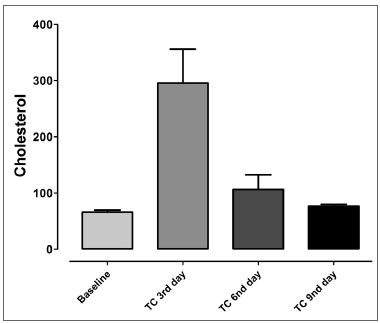 Figure 1. Average cholesterol of Wistar rats
4. DISCUSSION
The results show that Tyloxapol was effective in increasing the levels of serum total cholesterol from baseline, peaking on the third day after application. On days 6 and 9, however, there was a decrease in lipid levels, no longer with a statistically significant difference between the measured values and baseline values. This suggests that within 72 hours of Tyloxapol application at 200mg/kg, high cholesterol values can be achieved.
Several studies also showed that Tyloxapol was effective in raising plasma cholesterol levels in Wistar rats when administered by the same route and dose. However, despite the increasing lipid elevation shown over 24 hours, it is not possible to observe the durability of this effect on these papers.18,19,20 This same conclusion was also drawn when using the drug at a intravenous dose of 400mg/kg.21
In another study22 also using Triton WR1339 which assesses "dolichols" doses, a product that participates in the same process of cholesterol biosynthesis, the observed results also very close to those found in this study. The serum concentration of this product over eight days peaked on the fourth day and started to decline already on the eighth day, but with higher values compared to baseline. These data indicate that Triton WR 1339 acts on the concentrations of both cholesterol and dolichols in the same way, since both share the same biosynthesis process. In mice, peak action is observed at 24 hours and a drop of serum cholesterol is observed 48 hours after drug use.23
Although several studies have used Triton WR 1339 to induce hypercholesterolemia in rats, no literature was found that clearly define the variation in plasma cholesterol levels for long periods.
In this study, the induction of hypercholesterolemia by Triton WR 1339 proved to be effective in rats, peaking 72 hours after application of the drug. After this period there was a decrease to levels similar to baseline values, which can be misleading in studies with cholesterol-lowering agents for a period longer than three days after using the drug. It is noteworthy that throughout the study 10 animals died, pointing to a lower survival rate after drug application, which can be a limiting factor for future studies using this hypercholesterolemia induction model for longer periods.
REFERENCES
1. Kim HY, Jeong da M, Jung HJ, Jung YJ, Yokozawa T, Choi JS. Hypolipidemic effects of Sophora flavescens and its constituents in poloxamer 407-induced hyperlipidemic and cholesterol-fed rats. Biol Pharm Bull 2008 Jan;31(1):73-8.
2. Devi R, Sharma DK. Hypolipidemic effect of different extracts of Clerodendron colebrookianum Walp in normal and high-fat diet fed rats. J Ethnopharmacol 2004 Jan;90(1):63-8.
3. Okazaki M, Suzuki M, Oguchi K. Changes in coagulative and fibrinolytic activities in Triton WR-1339-induced hyperlipidemia in rats. Jpn J Pharmacol 1990 Feb;52(2):353-61.
4. Schwartz CJ, Valente AJ, Sprague EA, Kelley JL, Nerem RM. The pathogenesis of atherosclerosis: an overview. Clin Cardiol 1991 Feb;14(2 Suppl 1):I1-16.
5. Werner N, Nickenig G. Endothelial progenitor cells in health and atherosclerotic disease. Ann Med 2007;39(2):82-90.
6. Bahramikia S, Yazdanparast R. Effect of hydroalcoholic extracts of Nasturtium officinale leaves on lipid profile in high-fat diet rats. J Ethnopharmacol 2008 Jan 4;115(1):116-21.
7. Ardestani A, Bahramikia S, Yazdanparast R. Nasturtium officinale reduces oxidative stress and enhances antioxidant capacity in hypercholesterolaemic rats. Chem Biol Interact 2008 Apr 15;172(3):176-84.
8. Catanozi S, Rocha JC, Nakandakare ER, Passarelli M, Mesquita CH, Silva AA, et al. The rise of the plasma lipid concentration elicited by dietary sodium chloride restriction in Wistar rats is due to an impairment of the plasma triacylglycerol removal rate. Atherosclerosis 2001 Sep;158(1):81-6.
9. Watts GF, Jackson P, Mandalia S, Brunt JN, Lewis ES, Coltart DJ, et al. Nutrient intake and progression of coronary artery disease. Am J Cardiol 1994 Feb 15;73(5):328-32.
10. Seok SH, Park JH, Cho SA, Choi SA. Cholesterol lowering effect of SG-GN3, the extract of salted and fermented small shrimps, Acetes japonicus, in Triton WR-1339 or high cholesterol-diet induced hypercholesterolemic rats. J Ethnopharmacol 2004 Apr;91(2-3):231-5.
11. Sato K AY, Kimura S, Horiguchi M. Species differences between chicks and rats in inhibition of lipoprotein hydrolysis by Triton WR-1339. Comp Biochem Physiol C Pharmacol Toxicol Endocrinol 1995 Nov;112(3):315-9.
12. Kourounakis AP, Victoratos P, Peroulis N, Stefanou N, Yiangou M, Hadjipetrou L, et al. Experimental hyperlipidemia and the effect of NSAIDs. Exp Mol Pathol 2002 Oct;73(2):135-8.
13. Okunevich IV, Ryzhenkov VE. [Anti-atherosclerotic action of mildronate in experiment]. Patol Fiziol Eksp Ter 2002 Apr-Jun(2):24-7.
14. Horak J, Cuparencu B, Horak A. Acute effects of zopiclone on blood glucose level and serum lipids in hyperlipidemic rats. Interactions with PK 11195 and flumazenil. Acta Physiol Hung 2000;87(2):185-92.
15. Hoffman A, Lomnicky Y, Luria MH, Gilhar D, Friedman M. Improved lipid lowering activity of bezafibrate following continuous gastrointestinal administration: pharmacodynamic rationale for sustained release preparation of the drug. Pharm Res 1999 Jul;16(7):1093-7.
16. Perez C, Canal JR, Romero A, Torres MD. Experimental hypertriglyceridaemia and hypercholesterolaemia in rats. Acta Physiol Hung 1999;86(1):57-68.
17. Ara J, Sultana V, Qasim R, Ahmad VU. Hypolipidaemic activity of seaweed from Karachi coast. Phytother Res 2002 Aug;16(5):479-83.
18. Amrani S, Harnafi H, Bouanani Nel H, Aziz M, Caid HS, Manfredini S, et al. Hypolipidaemic activity of aqueous Ocimum basilicum extract in acute hyperlipidaemia induced by triton WR-1339 in rats and its antioxidant property. Phytother Res 2006 Dec;20(12):1040-5.
19. Lomnicky Y, Friedman M, Luria MH, Raz I, Hoffman A. The effect of the mode of administration on the hypolipidaemic activity of niacin: continuous gastrointestinal administration of low-dose niacin improves lipid-lowering efficacy in experimentally-induced hyperlipidaemic rats. J Pharm Pharmacol 1998 Nov;50(11):1233-9.
20. Goldfarb S. Rapid increase in hepatic HMG CoA reductase activity and in vivo cholesterol synthesis after Triton WR 1339 injection. J Lipid Res 1978 May;19(4):489-94.
21. Olson B, Schneeman BO. Alimentary lipemia is enhanced in fiber-fed rats. J Nutr 1998 Jun;128(6):1031-6.
22. Humaloja K, Roine RP, Salaspuro M. Effects of Triton WR 1339 and orotic acid on biliary and serum dolichols in rats. Metabolism 1998 Jun;47(6):644-9.
23. Xie W, Wang W, Su H, Xing D, Cai G, Du L. Hypolipidemic mechanisms of Ananas comosus L. leaves in mice: different from fibrates but similar to statins. J Pharmacol Sci 2007 Mar;103(3):267-74.
1. PhD, Associate Professor at the Physiology Department at UFJF. Professor at SUPREMA. 2. PhD, Assistant Professor at the Physiology Department at UFJF. 3. Physician. 4. Physician.
Institution (Affiliation): Universidade Federal de Juiz de Fora MG.
Correspondence: Luiz Carlos Bertges Departamento de Fisiologia, Instituto de Ciências Biológicas, UFJF Campus Universitário, Bairro Martelos Juiz de Fora, MG, CEP 36036900
This article was submitted to SGP (Publication Management System) of Rev Bras Cien Med Health on September 1, 2009. Cod. 37. Accepted on April 27, 2010.