
INTRODUCTION
Low back pain (LBP) is one of the most prevalent musculoskeletal disorders with a multifactorial clinical condition, related to biopsychosocial, sociodemographic, and economic factors(1-3), affecting 85%(5) of the population in the economically active phase(4-7). It is the main disabling factor that takes individuals away from their work activities and, consequently, generates biopsychosocial disorders(4,6,8).
According to some researchers, individuals who have acute episodes of LBP may develop chronic low back pain (CLBP)(4,6,9), that is, pain persisting for more than 12 weeks(1,4,10,11). Very often, this condition can be associated with low back pain, depression(6), and anxiety(8). These, in turn, can prolong the painful condition, which generates anguish, incapacity, and dissatisfaction, whether at work or in social life, reducing the quality of life(6,8). Most of the origins of CLBP are nonspecific, that is, Nonspecific Low Back Pain (NSLBP)(2,6,10).
Non-invasive treatments can provide significant gains and bring substantial results to this population(12). In this context, physiotherapists are health professionals who can help patients with NSLBP with regard to therapeutic resources and information about quality of life, being part of a multidisciplinary team(12,13). In this sense, it is known that physiotherapy is a great foundation in treatment through therapeutic exercises, health education, and also through the use of Global Postural Reeducation (GPR)(5,7,13-20).
GPR is a treatment method that uses three fundamental principles: individuality(7,21), causality, and totality(7,22). It is a philosophy that considers the existence of different muscular chains, that is, a series of interconnected muscles that constitute a continuity throughout the body that performs specific functional roles(7). Therefore, the ultimate aim of this approach is to intervene in reducing pain and functional disability(23,24).
Studies using the GPR method in patients with LBP have demonstrated benefits such as postural corrections (9,23), improved flexibility(23,24), increased range of motion(9,13,23), muscle strength(23) and functional capacity(4,19), reduction in pain intensity(7.13-20) and stiffness(24) and significant improvement in quality of life(15.19)
Other studies have shown that there is a great diversity of exercises recommended for the same pathology, however, the clinical implementation differs individually in the intensity and duration of the proposed exercises(10,11,25). A systematic review(26) identified specific features of exercise (>12 weeks in duration), such as individual and group stretching, with and without supervision, and additional interventions that decrease pain and improve function in adults with NSLBP. However, there are no recent systematic reviews documenting whether the GPR method is effective in NSLBP.
Therefore, this study aims to systematically review the literature to evaluate the effects of the Global Postural Reeducation method in relation to pain level, functional capacity, muscle strength, and flexibility in patients with Non-Specific Low Back Pain.
METHODS
Search strategy
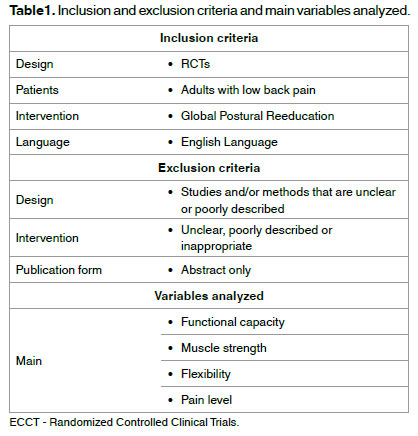
A search was performed in the National Library of Medicine (MedLine), Physiotherapy Evidence Database (PEDro), Latin American and Caribbean Literature in Health Sciences (LILACS), and Scientific Electronic Library Online (SciELO) databases. The most relevant studies originally published in the English language were analyzed, using the descriptors: “low back pain”, “flexibility”, “global stretching”, “active stretching” and “posture”. To find variations of keywords, MeSH was consulted.
Aiming for more relevant studies, only Randomized Controlled Clinical Trials (RCTs), performed with adult humans and articles published in the last ten years, were chosen. The search was performed in the first half of 2020.
The inclusion and exclusion criteria applied are shown in Table 1.
RESULTS
Fifty studies were identified in the databases involving the intervention of the GPR method in NSLBP. However, based on the application of the previously defined criteria, only five were eligible to be part of the scope of this review. Figure 1 presents the flowchart of the article selection process.
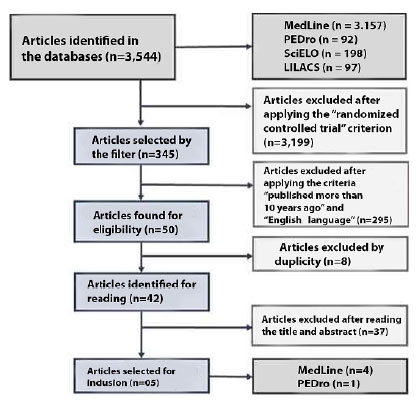
Figure 1. Flowchart of the article selection process.
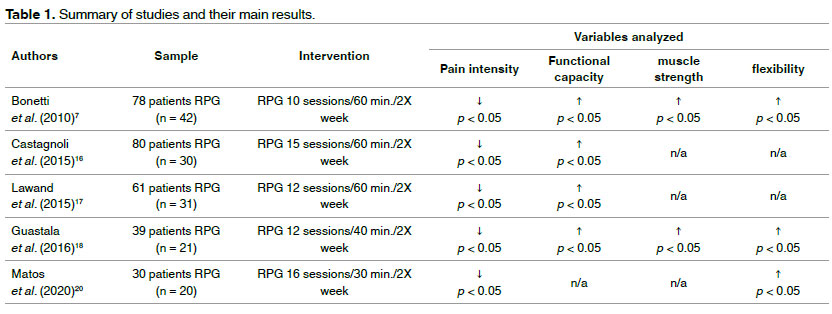
A total of 277 patients were involved in the studies analyzed in this review, the majority of whom were female(7,16-18,20). After applying the GPR, the RCTs showed significant results for the variables analyzed (pain intensity, functional capacity, muscle strength, and flexibility)(7,16-18,20).
In general, the interventions performed in some authors’ studies were of short observation, ranging from eight to 16 sessions of 30-60 minutes, twice a week, involving GPR protocols versus stretching exercises, with some studies changing their types of exercises(7,16-18,20). One study compared the GPR method with medication (control)(17). Table 1 summarizes the studies and their main results.
DISCUSSION
This study systematically reviewed clinical trials over the last ten years to evaluate the effects of the GPR method on the level of pain, functional capacity, muscle strength, and flexibility in patients with NSLBP.
GPR is a treatment method that uses global stretching associated with breathing and proprioceptive stimuli(21). This method treats the cause of the dysfunction to release tension in the muscle chains involved(21). Active postures are used in the isometric position through an eccentric contraction and axial traction, that is, it performs global stretching of the muscle chains(18,21-23). GPR involves a series of gentle active movements and postures aimed at realigning joints, lengthening shortened muscles, and increasing contraction of the muscles involved, aiming to recover myofascial tension. Thus, the method aims to correct muscle compensation, dealing with the cause of musculoskeletal pain(21,22). This method has been used in several clinical conditions, as in the studies selected for this review on NSLBP(7,16-18,20).
In the study by Bonetti et al.(2010)(7), GPR included therapeutic postures, lying down, sitting or standing. According to this author, postures can be combined in several ways during care, and are chosen based on the intensity of pain, functional capacity, and flexibility of the patient(7). However, Castagnoli et al. (2015)(16) opted for individualized treatment, in which physiotherapists chose the most appropriate exercises based on a standardized protocol, taking into account the limitations related to pain. However, Lawand et al. (2015)(17) opted for prolonged maintenance of the posture, leading to more effective stretching.
Considering the degree of difficulty of each patient and the predominance of muscular chains, Guastala et al. (2016)(18) used three positions per session, for 15 minutes each. The chosen treatment postures were alternated between open and closed hips. The GPR protocol by Bonetti et al.(7) only included the closure of the coxofemoral angle, as these are the most common retractions in the population(18). This statement is at odds with the study by Guastala et al. (2016)(18), in which changes were found in both chains, with the anterior chain being prevalent in most patients.
The intervention used by Mattos et al. (2020)(20) consisted of the isometric position using eccentric contraction and axial traction. This posture, according to Bonetti et al. (2010)(7) and Lawand et al. (2015)(17) should be maintained for as long as possible, thus promoting the reduction of gamma activity and muscle spasm, and, consequently, providing pain relief and gaining flexibility and muscle strength. Furthermore, the muscles that are being stretched are inhibited and their antagonists are facilitated by the action of the inverse myotatic reflex or autogenic inhibition(7). Thus, Mattos et al.(20) corroborate that there is an improvement in the intensity of pain and flexibility of patients with the application of the GPR method.
In Clinical Trials, it was observed that studies can be influenced by intervening variables. An important aspect observed by Bonetti et al. (2010)(7) was the absence of specific subgroups, in relation to the age of the patients, the phase of pain (acute, subacute, or chronic), and clinical characteristics, which was corroborated by Castagnoli et al. (2015)(16), as these are complex and variable. Because of this, it would be interesting to divide the sample into subgroups with similar characteristics in clinical assessment and subject patients to unique interventions, comparing the results to a control group. Lawand et al. (2015)(17) add that the educational role of the physiotherapist during GPR care, providing guidance on each exercise and explaining the need to maintain the routine both in the clinic and at home, can influence the results.
Guastala et al. (2016)(18) demonstrated difficulties in patients adhering to care, when they had losses in the sample, because, with the reduction in pain intensity, patients interrupted care early, thus preventing a comparison of results. Despite methodological differences, Mattos et al.(20), with just one GPR posture, achieved a significant reduction in pain. Thus, better-structured methodology can help explain these factors and minimize these sources of bias (7,16,17,19).
Since the treatments provided clinically significant improvements in the variables analyzed, the results are encouraging and should be confirmed by additional studies with more rigorous methodological standards, including larger sample size, subgroup composition and longer follow-up of patients with NSLBP.
CONCLUSION
This systematic review study showed that the GPR method is effective in reducing pain, increasing functional capacity, muscle strength, and flexibility in patients with NSLBP, both in short and medium-term follow-up. It was also possible to specifically observe a significant improvement in pain intensity and functional capacity using the GPR technique.
REFERENCES
1. Delitto A, George SZ, van Dillen LR, Whitman JM, Sowa G, Shekel P, Denninger TR et al. Low back pain: clinical practice guidelines linked to the International Classification of Functioning, Disability, and Health from the Orthopaedic Section of the American Physical Therapy Association. J Orthop Sports Phys Ther. 2012;42(4):1-57.
2. Nijs J, Apeldoorn A, Hallegraeff H, Clark J, Smeets R, Malfliet A, Girbes EL et al. Low back pain: guidelines for the clinical classification of predominant neuropathic, nociceptive, or central sensitization pain. Pain Physician. 2015;18(3):333-46.
3. Chou R, Deyo R, Friedly J, Skelly A, Hashimoto R, Weimer M, Fu R et al. Nonpharmacologic therapies for low back pain: a systematic review for an American College of Physicians Clinical Practice Guideline. Ann Intern Med. 2017;166(7):493-505.
4. Becker A, Held H, Redaelli M, Strauch K , Chenot JF, Leonhardt C, Keller S et al. Low back pain in primary care: costs of care and prediction of future health care utilization. Spine. 2010;35(18):1714-20.
5. Almeida N, Paladini LH, Pivovarski M, Gaideski F, Korelo RIGK, de Macedo ACB. Immediate analgesic effect of 2KHz interferential current in chronic low back pain: randomized clinical trial. BrJP. 2019;2(1):27-33.
6. Imamura ST, Kaziyama HHS, Imamura M. Lombalgia. Rev Med. 2001;80(Pt 2):375-90.
7. Bonetti F, Curti S, Mattioli S, Mugnau R, Vanti C, Violante FS et al. Effectiveness of a Global Postural Reeducation program for persistent low back pain: a non-randomized controlled trial. BMC Musculoskelet Disord. 2010;11(12):1-12.
8. James SL, Abate D, Abate KH, Abay SM, Abbafati C, Abbasi N et al. (2018). Global, regional, and national incidence, prevalence, and years lived with disability for 354 diseases and injuries for 195 countries and territories, 1990-2017: a systematic analysis for the Global Burden of Disease Study 2017. Lancet. 2018; 392;(10):1789-858.
9. Ladeira CE. Evidence based practice guidelines for management of low back pain: physical therapy implications. Rev Bras Fisioter. 2011;15(3):190-9.
10. Airaksinen O, Brox JI, Cedraschi C, Hildebrandt J, Klaber-Moffett J, Kovacs F, Mannion AF et al. Chapter 4. European guidelines for the management of chronic nonspecific low back pain. Eur Spine J. 2006;15(suppl 2):192-300.
11. Koes B, van Tulder M, Lin C-W, Macedo LG, McAuley J, Maher C. An updated overview of clinical guidelines for the management of non-specific low back pain in primary care. Eur Spine J. 2010;19(12):2075-94.
12. Thiese MS, Hughes M, Biggs J. Electrical stimulation for chronic non-specific low back pain in a working-age population: a 12-week double blinded randomized controlled trial. BMC Musculoskeletal Disord. 2013;14(1):117.
13. Cavalcanti IF, Antonino GB, Monte-Silva KK, Guerino MR, Ferreira APL, Araújo MGR. The Global Postural Re-education in non-specific neck and low back pain treatment: a pilot study. J Back Musculoskelet Rehabil. 2020. Doi: 10.3233/BMR-181371.
14. Miyamoto GC, Lin C-WC, Cabral CMN, van Dongen JM, van Tulder MW. Cost-effectiveness of exercise therapy in the treatment of non-specific neck pain and low back pain: a systematic review with meta-analysis. Br J Sports Med. 2018;53(3):172-81.
15. Hoy D, March L, Woolf A, Blyth F, Brooks P, Smith E, Vos T et al. The global burden of neck pain: estimates from the Global Burden of Disease 2010 study. Ann Rheum Dis. 2014;73(7):1309-15.
16. Castagnoli C, Cecchi F, Del Canto A, Paperini A, Boni R, Pasquini G et al. Effects in short and long term of Global Postural Reeducation (GPR) on chronic low back pain: a controlled study with one-year follow-up. Sci World J. 2015:271436. Doi: 10.1155 / 2015/271436.
17. Lawand P, Lombardi Júnior I, Jones A, Sardim C, Ribeiro LH, Natour J. Effect of a muscle stretching program using the global postural reeducation method for patients with chronic low back pain: a randomized controlled trial. Joint Bone Spine. 2015;82(4):272-7.
18. Guastala FAM, Gurini MH, Klein PF, Leite VC, Cappellazzo R, Facci LM. Effect of global postural re-education and isostretching in patients with nonspecific chronic low back pain: a randomized clinical trial. Fisioter Mov. 2016;29(3):515-25.
19. Pillastrini P, Banchelli F, Guccione A, Di Ciaccio E, Violante FS, Brugnettini M, Vanti C. Global Postural Reeducation in patients with chronic nonspecific neck pain: cross-over analysis of a randomized controlled trial. Med Lav. 2018;109(1):16-30.
20. Matos FP, Dantas EHM, de Oliveira FB, de Castro JBP, Conceição MCSC, Nunes RAM et al. Analysis of the pain symptoms, flexibility, and hydroxyproline concentration in individuals with low back pain submitted to Global Postural Re-education and stretching. Pain Manag. 2020;10(3):167-77.
21. Souchard PE. RPG: fundamentos da reeducação postural global: princípios e originalidade. 2a. ed. São Paulo: Realizações; 2003.
22. Souchard PE. Reeducação postural global: método do campo fechado. 5a. ed. São Paulo: Elseviser; 2011.
23. Rosário JLP, Sousa A, Cabral CMN, João SMA, Marques AP. Reeducação postural global e alongamento estático segmentar na melhora da flexibilidade, força muscular e amplitude de movimento: um estudo comparativo. Fisioter Pesqui. 2008;15(1):12-8.
24. Ferreira GE, Barreto RGP, Robinson CC, Plentz RDM, Silva MF. Global Postural Reeducation for patients with musculoskeletal conditions: a systematic review of randomized controlled trials. Braz J Phys Ther. 2016;20(3):194-205.
25. Swinkels A, Cochrane K, Burt A, Johnson L, Lunn T, Rees AS. Exercise interventions for non-specific low back pain: an overview of systematic reviews. Physical Therapy Reviews. 2009;14(4):247-59.
26. Hayden JA, van Tulder MW, Tomlinson G. Systematic review: strategies for using exercise therapy to improve outcomes in chronic low back pain. Ann Intern Med. 2005;142(9):776-85.