
INTRODUCTION
Since the end of 2019, the world has been living in an emerging situation caused by a virus with rapid temporal and geographical spread known as Severe Acute Respiratory Syndrome Coronavirus 2 (SARS-CoV-2), which characterized a COVID-19 pandemic. However, this event is not something new in world history; in previous years there were similar situations, as happened during outbreaks of the Black Death, syphilis, smallpox, and tuberculosis, among others, when thousands of people lost their lives to lethal infectious diseases(1).
The new coronavirus comes from a family of Severe Acute Respiratory Syndrome (SARS) that affects the respiratory system, causing flu-like symptoms that can quickly worsen and even lead to death (2). This new betacoronavirus emerged in China, in Wuhan in December 2019, through the ingestion of a contaminated bat, which is the natural host of this virus, however, there is no record of when exactly this virus had contact with humans (3,4).
SARS-CoV-2 was brought to Brazil by people with high purchasing power and due to its high transmissibility, it spread quickly, thus causing a continuous outbreak of COVID-19 and representing an extraordinary threat to public health(5). Isolating symptomatic cases and tracking contacts have been the most effective way to reduce the spread of the virus and control outbreaks (6), in addition to the main preventive health care, such as hand hygiene habits and the use of a surgical mask as personal protective equipment(7).
Some factors enable the high transmission rate of the SARS-CoV-2 virus, one of which is the form of contagion, as it is a virus that infects the airways, and transmission is through saliva, sneezes, and coughs of infected people(8). Another way is the fact that some people are asymptomatic. These have a high rate of virus spread in a community environment, and these people who have had contact can develop flu-like symptoms and progress to a severe form of the disease(9).
The most common symptoms of COVID-19 patients are nonspecific and mainly include fever, cough, and myalgia(10). Others that occur frequently are flu-like syndromes such as sore throat, vomiting, diarrhea, chills, conjunctival congestion, and headaches (11). However, symptoms such as ageusia and anosmia have become quite common in patients with COVID-19, which are chemical changes that cause the person to lose the taste and smell of food and perfumes, and sometimes, these are the only symptoms reported by some affected people (12).
In around 80% of infected patients, the disease is mild and restricted to the conductive and upper airways. These individuals can be monitored at home and treated with medications to relieve symptoms (13). However, 20% of infected patients will present pulmonary infiltrates, which may progress to more serious forms of the disease. When SARS-CoV-2 enters the lungs, it causes damage through the stimulation of inflammatory processes that seriously damage the alveoli, disabling them from carrying out gas exchange correctly, leading to the development of Severe Acute Respiratory Distress Syndrome (ARDS)(14).
In the epidemiological bulletin issued by the Ministry of Health (MS), it is stated that among SARS deaths in Brazil, COVID-19 dominates with a rate of 89.4%, with the most affected being males, those of white race, and the prevalence of age between 70 and 79 years. Heart disease and diabetes were the most common comorbidities also found among people who died from COVID-19 in Brazil, over the period of one year (11-04-2020 to 17-04-2021)(15).
OBJETIVE
From the first registered case of a person infected with COVID-19 in the state of Pará (March 18, 2020) until April 2021, more than 10,000 deaths from the new coronavirus have been recorded in the state of Pará, making the state occupy the 12th place in the Brazilian ranking of deaths from COVID-1916,17. Therefore, this study aims to analyze the profile of deaths from COVID-19 in the health departments of regions of the state of Pará.
METHODOLOGY
This is a descriptive, retrospective research with a quantitative approach. The descriptive study is widely used to characterize semiological, etiological, pathophysiological, and epidemiological events of a disease or events, studying their distribution in time and space, according to their particularities. Therefore, a retrospective descriptive study makes a temporal analysis of a disease or event from a certain point in history to the present. The quantitative approach aims to collect and analyze data on quantitative variables, thus allowing the deep nature of a reality to be identified(18,19).
The state of Pará has 144 municipalities, with a total area of 1,245,870.707 km², with an estimated population of 8,690,745, making it the second largest in Brazil due to its territorial extension, with the main source of income being the agricultural sector and mineral extraction(20). These municipalities are subdivided into thirteen Regional Health Centers (CRS), which are in different municipalities, and distributed logistically. These are districts that form the main means of health care, which are managed by the State Health Department(21).
Each Regional Health Center has its headquarters and its regulatory system, which aims to decentralize services and break down geographical barriers to obtain qualified care for users of the Unified Health System (SUS). According to the Public Health Secretariat (SESPA), the regions are located in Araguaia, Baixo Amazonas, Carajás, Lago de Tucuruí, Metropolitana I, Metropolitana II, Metropolitana III, Rio Caetés, Tapajós, Tocantins, Xingu, Marajó I and Marajó II(21).
The study population is all cases of confirmed deaths from COVID-19 that are registered in the CRS, using specific and secondary data collected through the SESPA database (https://www.covid-19.pa.gov.br/#/). Thus, deaths confirmed by Covid-19 whose data were specified on the official platform are included, and those whose data were incomplete, or died due to complications from other pathologies, even if they had a confirmed diagnosis of COVID-19, were excluded.
The variables analyzed were: gender (female/male), age group (in years), number of deaths per Regional Health Center, and number of deaths per month, in addition to evaluating confirmation and death rates according to each test used. To this end, it was decided to limit the time for sample collection, including cases notified until June 10, 2021, so that it was possible to analyze the profile of deaths due to COVID-19.
To analyze the distribution of data, the Shapiro-Wilk normality test was performed to identify whether the population has a normal distribution. The results were analyzed using the Student’s T-Test for normal distribution, and the Chi-square test for those with non-normal distribution. The descriptive statistics test was performed using absolute and percentage distributions using the BioStat 5.0 software, and Microsoft Excel 2010, to create the database, tables, and graphs. This methodology has the basic objective of synthesizing a series of values of the same nature, allowing a global view of the variation in values, and organizing and describing the data.
The research serves to provide knowledge to the population of the state of Pará about the lethality of a virus that is still being studied, and how it spreads through the state’s Regional Health Center, thus, being able to serve as a basis for implementing public COVID-19 prevention programs in Pará, in addition to contributing to national literature.
Following Resolution No. 466 of December 12, 2012, the risks and discomforts of this study are null as it is research that uses secondary data from a public access platform, and does not need to be evaluated by the Research Ethics Committee.
RESULTS
During the period from March 2020 to the beginning of June 2021, 14,864 deaths confirmed by COVID-19 were registered in the state of Pará, aged 0 to 80 years or more. The state is divided into 13 Regional Health Centers, among them Metropolitana I presented the highest death rate with 39.54% (5,877) deaths, followed by Baixo Amazonas with 15.78% (2,346) deaths, and Carajás with 11.73% (1,744) deaths (Figure 1).
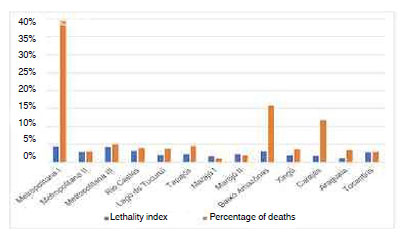
Figure 1. Distribution of deaths from COVID-19 in the Regional Health Center of Pará between March 18, 2020 and June 10, 2021, and their respective fatality rates.
It was observed that the Regional Health Center with the highest percentage of deaths also had the highest mortality rate, with 4.47%, Metropolitana I. Thus, the regions with the lowest mortality rates were: Araguaia with 1.11% and Marajó I with 1.26%, however, Marajó I and II presented lethality rates higher than the percentage of deaths, with 1.62% lethality for 1.10% of deaths, and 2.29% lethality for 1.89% of deaths, as represented in Figure 1.
A p-value ≤0.05 was considered statistically significant. Graph represented as a percentage. % = percentage. Data extracted from SESPA.
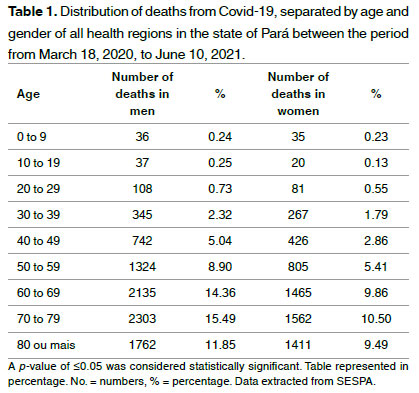
In the analysis of deaths by gender, there was a prevalence of males with 59.14% (8,792) of deaths compared to females, who had a lower rate of 40.86% (6,072) of deaths. When correlated to age groups, we can note that the age group with the highest number of deaths was 60 to 79 years old in males with 29.85% (4,438) of deaths, while females accounted for 20.36% (3,027) of deaths in the same age group, and the least affected age was 0 to 19 years in both genders, with females accounting for a total of 0.36% (55) of deaths, compared to males at the same age with 0.49 % (73) of deaths (Table 1).
Between the period from March 18, 2020 to June 10, 2021, 530,248 cases of Covid-19 were confirmed, with the rapid test being the most used for this confirmation, which detected 68.07% (36,0892) of confirmed cases, of which 36.01% (5,352) died, but the most used test to detect death was the Reverse Transcriptase Reaction test followed by Polymerase Chain Reaction (RT-PCR), which recorded 53.97% (8,023) deaths (Figure 2).
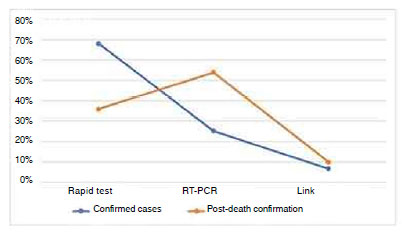
Figure 2. Distribution of the number of confirmed cases and confirmed postmortem deaths and types of tests performed for diagnosis between the period from March 18, 2020, to June 10, 2021.
A p-value ≤ 0.05 was considered statistically significant. Graph represented as a percentage. RT-PCR = Reverse Transcriptase Reaction followed by Polymerase Chain Reaction, % = percentage. Data extracted from SESPA.
During the collection period, a discrepancy was observed in the number of deaths in the State between May 2020 (3139 cases of deaths), March 2021 (2307 cases of deaths) and April 2021 (2178 cases of deaths), these three respective months stood out for a high number of registered deaths when compared to other epidemic months. The months of March 2020 (first case of death), June 2021 (74 cases of death), and October 2020 (206 confirmed deaths) were the months that recorded low obituaries (Figure 3).
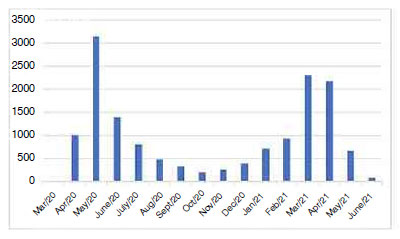
Figure 3. Distribution in months of deaths from COVID-19 during the period from March 18, 2020, to June 10, 2021, in the state of Pará.
A p-value ≤0.05 was considered statistically significant. Graph represented in whole numbers. Data extracted from SESPA.
When analyzing the state of Pará, some cities stood out in terms of a number of deaths, such as Belém (4828 deaths), Santarém (891 deaths), Ananindeua (795 deaths), Marabá (413 deaths), and Parauapebas (408 deaths). Belém and Ananindeua are municipalities located within the Metropolitan Health Region I, Santarém in the Baixo Amazonas Regional Health Center, Marabá and Parauapebas in the Carajás Regional Health Center. And these municipalities were able to be listed in a ranking of cities with the highest number of deaths when compared to other cities in the state.
DISCUSSION
COVID-19 is the viral disease that has killed the most people in the last millennium, and its behavior varies according to each region of the world, with the American continent being the most affected, containing the highest number of deaths, totaling 1,258,134 cases, but why this contamination behaves differently on each continent has not been discovered yet(22,23). In America, Brazil together with the United States is responsible for more than 796,151 deaths, being the most affected by COVID-19, and Brazil alone recorded 272,899 deaths in 1 year, being the second country in the ranking with the highest number of deaths (23). The state of Pará recorded 14,864 deaths from COVID-19 in 1 year and 3 months, being considered the 12th state with the highest death rate in the country during the pandemic. Among the states in the North region, Pará followed by Amazonas and Rondônia were the states that presented the highest number of deaths from respiratory causes, with 19,297, 7,655, and 6,021, respectively(24).
Amazonas is the state in the North region with the greatest severity in terms of average respiratory deaths, where deaths from COVID-19 from the 1st to the 15th April of 2020 exceeded the respiratory mortality expected for the first 15 days of the month. Previous years have shown that the seasonal period with the highest rate of deaths from respiratory diseases is in July, and in 2020 the annual respiratory mortality peaks were later(25). The months of July are always marked by travel, crowds, a lot of heat, and ending with the first rains, with no difference from the pandemic year, where many people traveled to closed and reserved places, but still had contact with unknown people(26). These states have international airports and bus stations that allow access to other regions, both national and international, and the possibility of greater intensification and spread of the virus may arise(27). In the Northern region of Brazil, the speed at which the virus spread covered a large part in a short time, as the states are marked by extensive areas of clusters with high rates of confirmed cases. Therefore, confirmed death cases increased proportionally(28).
Health policies, aiming to improve the integration of health services, the distribution of resources, and the expansion of access, developed the proposal to divide the states into Regional Health Centers, and thus, it was sought through actions aimed at their structuring and operation(29). Therefore, the state of Pará has 13 health regions distributed throughout the state, namely: Metropolitana I, II and III, Rio Caetés, Lago do Tucuruí, Tapajós, Marajó I e II, Baixo Amazonas, Xingú, Araguaia, Carajás and Tocantins (21).
In the state of Paraná, a study performed among the 22 Regional Health Centers showed that in absolute numbers, the region presenting the most deaths from COVID-19 was the Metropolitana Regional Health Center (2nd Regional Health Center), as was found in Pará where it was observed a total of 39.54% of deaths in Metropolitana Regional Health Center I, but this could be due to them being the most populous regions in their respective states. Since the first wave, these states have implemented non-pharmacological prevention measures, however, they were not enough to contain the damage caused to society (30,31).
Studies performed in Fortaleza, Recife, São Paulo, Manaus, and other large capitals in Brazil, observed that the age group most affected by Covid-19 was between 40 and 59 years old in both genders(32,33). They also show that the number of deaths in males has a slightly earlier age range, being between 40 and 79 years old, diverging from that found in Pará, which is between 60 and 79 years old. In females, the age group presented as the highlight in the frequency of deaths in the country’s capitals was from 40 to 79 years old, which also differs from what was found in Pará, where the highest frequency was after the age of 79 (33,34). The mortality rate is higher in men than in women, as seen in different parts of the country, as found in the present study. The association of death with gender and age may also be linked to comorbidities due to the aging of the population and poor lifestyle habits, which can quickly worsen the situation (33,34,35,36).
It has already been proven that men have more vices than women, especially smoking, as people who smoke tend to become more easily infected with COVID-19 due to the habit of holding their hands over their mouths due to cigarettes, in addition to smoking also causes low antibodies, making these people more susceptible to infectious diseases (37). Passive smokers should also be observed, as they are affected due to living with people who smoke and suffer from the effects and complications of respiratory diseases (38).
The confirmed cases of COVID-19 who died were diagnosed through a rapid laboratory test, and RT-PCR, the majority of diagnoses registered in the SESPA database, were through a rapid test, due to its quick and cheap way of reproduction, being small, portable, and easy to interpret. Although it cannot measure the amount of antibodies, it detects exposure from the 8th day onwards and identifies asymptomatic/symptomatic patients, and those who have eliminated viruses, with a sensitivity of 80% in the acute phase and may reduce effectiveness according to the disease, reaching a sensitivity of 30.2% (39,40). Soon after, the high-cost RT-PCR swab test, at the beginning of the pandemic, was only performed in private laboratories, despite its high efficiency (>95%), this test detects the virus from the 3rd to the 5th day in asymptomatic/symptomatic patients (41). Only after a few months of the pandemic, the state can make the RT-PCR test available through the public health network. The Epidemiological Link Variable found in data collection was not considered by other researchers, or mentioned in other studies. In Pará, the links of individuals who tested positive for Covid-19 were considered and tested, for safety and case control.
Brazil suffered from two epidemiological waves within a year of the pandemic, the first wave being between April and August 2020 with its peak in June, due to the delay in delivering test results for Covid-19, as at first the diagnosis was made through symptoms, and only a few months later specific tests came along. The second wave from December 2020 to February 2021, reaching its maximum peak in January of that year, was caused by non-compliance with social distancing rules (36,42). In Pará, the waves were smaller from April to June, peaking in May 2020, and in an attempt to soften the infection curve, the lockdown was instituted, which limited the movement of people in public places in Metropolitana Regional Health Center I, mainly in the capital. The second wave occurred from April to May 2021, maintaining the peak in April, attributing this increase to the lack of basic inputs to contain the virus among the population, and the failure to use a mask. Similar data could be observed in the Distrito Federal, which presented its peaks in deaths between March and May 2020 after the decision to place the city in lockdown was revoked, and stores, restaurants, and bars returned to operation, even with care, however, it was not enough (42,43).
As the introduction of SARS-CoV 2 began in the capitals and then spread to interior cities, the country’s large cities had to take action to prevent deaths. Thus, São Paulo, Rio de Janeiro, Manaus, Fortaleza, Recife, Curitiba, Cuiabá, and Belém - the ones presented in the study - due to the high rate of deaths from respiratory diseases, developed restrictive measures to avoid the large circulation of people and restrict the transport of virus by people without symptoms to other regions of the state or even the country (5,32,36,43).
CONCLUSION
With the health system divided by regions, it was noticed that the region of the great capital, the Metropolitana Regional Health Center I, had a higher rate of deaths among Pará citizens aged between 60 and 80 years and beyond, in addition to affecting more men than women. The behavior of COVID-19 is not seasonal like that of Influenza, which affects the population more in July, being later in terms of deaths and affecting the population at any time of the year, during which there were two epidemiological waves.
The database used during the research allowed us to collect data, however, one of the limitations of the study is the lack of more specific epidemiological data released by SESPA such as deaths by race, and comorbidities, in addition to the difficulty in finding regional data. More studies on the Regional Health Center are necessary so that future comparisons can be made and so that strategies to combat COVID-19 are more effective.
REFERENCES
1. Morens DM, Daszak P, Markel H, Taubenberger JK. Pandemic COVID-19 Joins History’s Pandemic Legion. Mbio, S.I, v. 3, n. 11, p. 812-820, maio 2020.
2. Ministério da Saúde. Sobre a doença. Disponível em: https://coronavirus.saude.gov.br/index.php/sobre-a-doenca. Acesso em: 18 mar. 2021.
3. Jiang S, Du L, Shi Z. An emerging coronavirus causing pneumonia outbreak in Wuhan, China: calling for developing therapeutic and prophylactic strategies. Emerg Microbes Infect., S.I, v. 1, n. 9, p. 275-277, 31 jan. 2020.
4. Hu B, Guo H, Zhou P, Shi Z. Characteristics of SARS-CoV-2 and COVID-19. Nature Reviews. Microbiology. S.I., p. 141-154. mar. 2021.
5. Santos JAF. Covid-19, causas fundamentais, classe social e território. Trabalho, Educação e Saúde, Rio de Janeiro, v. 18, n. 3, 2020, e00280112. DOI: 10.1590/1981-7746-sol00280.
6. Pradhan D, Biswasroy P, Naik PK, Ghosh G, Rath G. A Review of Current Interventions for COVID-19 Prevention. Arch Med Resh, S.I, v. 51, n. 5, p. 363-374, jul. 2020.
7. Hellewell J, Abbott S, Gimma A, Bosse NI, Jarvis CI, Russell TW, Munday JD, Kucharski A, Funk S, Eggo RM. Feasibility of controlling COVID-19 outbreaks by isolation of cases and contacts. Lancet Glob Health. [S.I.], p. 488-496. abr. 2020.
8. Gao M, Yang L, Chen X, Deng Y, Yang S, Xu H, Chen Z, Gao X. A study on infectivity of asymptomatic SARS-CoV-2 carriers. Respiratory Med. S.I, p. 1-5. jul. 2020.
9. Sayampanathan AA, Heng CS, Hwee PP, Pang J, Leong TY, Lee VJ. Infectivity of asymptomatic versus symptomatic COVID-19. The Lancet. [S.I.], p. 93-94. dez. 2020.
10. Umakanthan S, Sahu P, Ranade AV, Bukelo MM, Rao JS, Abrahao-Machado LF, Dahal S, Kumar H, Kv D. Origin, transmission, diagnosis and management of coronavirus disease 2019 (COVID-19). Postgraduate Medical Journal. S.I, p. 753-758. nov. 2020.
11. Patel KP, Patel PA, Vunnam RR, Hewlett AT, Jain R, Jing R, Vunnam SR. Gastrointestinal, hepatobiliary, and pancreatic manifestations of COVID-19. Journal Clinical Virology. S.I, p. 1-5. abr. 2020.
12. Vaira LA, Salzano G, Deiana G, Riu GD. Anosmia and Ageusia: Common Findings in COVID-19 Patients. Laryngoscope, S.I, v. 7, n. 130, p. 1787-1787, jul. 2020.
13. Mason RJ. Pathogenesis of COVID-19 from a cell biology perspective. European Respiratory Journal. S.I, p. 1-9. abr. 2020.
14. Wang F; Kream RM; Stefano GB. Long-Term Respiratory and Neurological Sequelae of COVID-19. Med Sci Monit., S.I, v. 20, n. 1, p. 1-10, nov. 2020.
15. Ministério Da Saúde. (org.). Boletim epidemiológico especial. Brasília: Ministério da Saúde, 2021. 107 p.
16. Ministério Da Saúde. Covid-19 No Brasil. 2021. Disponível em: https://susanalitico.saude.gov.br/extensions/covid-19_html/covid-19_html.html. Acesso em: 07 abr. 2021
17. Agencia Pará. (org.). Confirmado o primeiro caso de Covid-19 no Pará. 2020. Disponível em: https://agenciapara.com.br/noticia/18475/. Acesso em: 07 abr. 2021.
18. Hochman B, Nahas FX, Oliveira Filho RS de, Ferreira LM. Desenhos de pesquisa. Acta Cir Bras. 2005;20(suppl 2).
19. Esperón JMT. Pesquisa Quantitativa na Ciência da Enfermagem. Esc Anna Nery Rev Enferm. 2017;21(1).
20. Instituto Brasileiro de Geografia e Estatistica. Cidades e Estados. 2020. Disponível em: https://www.ibge.gov.br/cidades-e-estados/pa.html. Acesso em: 19 maio 2021.
21. SESPA. Secretaria de Estado e Saúde Pública. Pes-Pa 2012 - 2015: Plano Estadual De Saúde Do Pará. Belém: Sespa, 2012. 248 p.
22. Petersen E.; Koopmans M.; Go U.; Hamer DH.; Petrosillo, N; CASTELLI, Francesco; STORGAARD, Merete; STORGAARD, Merete; SIMONSEN, Lone. Comparing SARS-CoV-2 with SARS-CoV and influenza pandemics. Lancet Infect Dis, [s. l], v. 20, n. 9, p. 238-244, set. 2020
23. Boschiero MN; Palamim CVC; Ortega MM; Mauch, RM; Marson, FAL. One Year of Coronavirus Disease 2019 (COVID-19) in Brazil: A Political and Social Overview. Ann Glob Health, online, v. 87, n. 1, p. 1-27, mar. 2021.
24. Mendonça FD; Rocha SS; Pinheiro DLP; Oliveira SV. de. Região Norte do Brasil e a pandemia de Covid-19: análise socioeconômica e epidemiológica. Journal Health Npeps. Online, p. 20-37. jun. 2020.
25. Alonso WJ; Schuck-Paim C; Freitas ARR; Kupek E; Wuerzius CR; Negro-Calduch E; Fernandes RM; Cristo EB; Veiga ABG; Giglio R. Covid-19 em contexto: comparação com a mortalidade mensal por causas respiratórias nos estados brasileiros. Interam J Med Health. Online, p. 1-15. mar. 2020.
26. Alonso WJ; Tamerius J; Freitas ARR. Respiratory syncytial virus causes more hospitalizations and deaths in equatorial Brazil than influenza (including during the 2009 pandemic). Acad. Bras. Ciênc, [s. l], v. 92, n. 1, p. 1-10, mar. 2020.
27. Gonçalves CWB; Gomes DLF; Pinto Neto AB; Lima GS; Reis KHJF; Cláudio ES. Incidência da COVID-19 nos estados da região norte do Brasil. Rev Pre Infec e Saúde., [s. l], v. 1, n. 1, p. 1-7, jun. 2020.
28. Guimarães RB; Catão RC; Martinuci OS; Pugliesi EA; Matsumoto PSS. O raciocínio geográfico e as chaves de leitura da Covid-19 no território brasileiro. Estudos Avançados, [s. l], v. 99, n. 34, p. 119-140, ago. 2020.
29. Casanova AO; Cruz MM; Giovanella L; Alves GR; Cardoso GCP. A implementação de redes de atenção e os desafios da governança regional em saúde na Amazônia Legal: uma análise do Projeto QualiSUS-Rede. Ciência e Saúde Coletiva, online, v. 22, n. 4, p. 1209-1224, abr. 2017.
30. Paiva CI; Nasr AMLF; Magatão DS; Ditterich RG; Guimarães RRM; Piler RA; Preto CAG; Werner Junior N; Lopes MGD; Fredrich V. Perfil epidemiológico da Covid-19 no Estado do Paraná. Revista Saúde Pública, Paraná, v. 3, n. 1, p. 39-61, dez. 2020.
31. Houvèssou GM; Souza TP; Silveira MF. Medidas de contenção de tipo lockdown para prevenção e controle da COVID-19: estudo ecológico descritivo, com dados da África do Sul, Alemanha, Brasil, Espanha, Estados Unidos, Itália e Nova Zelândia, fevereiro a agosto de 2020. Epidemiologia e Serviços de Saúde, [s. l], v. 30, n. 1, p. 1-12, jan. 2021.
32. Orellana JDY; Marrero L; Horta BL. Excesso de mortes por causas respiratórias em oito metrópoles brasileiras durante os seis primeiros meses da pandemia de COVID-19. Caderno de Saúde Pública, [s. l], v. 37, n. 5, p. 1-17, mar. 2021.
33. Scobar AL; Rodriguez TDM; Monteiro JC. Letalidade e características dos óbitos por COVID-19 em Rondônia: estudo observacional. Epidemiol. Serv. Saúde, Brasília, v. 30, n. 1, p. 1-10, jan. 2021.
34. Carvalho AD; Deus AAF; Trindade TCS; Tittoni AA. Perfil epidemiológico dos casos e óbitos por síndrome respiratória aguda grave confirmados para Covid-19. Revista Baiana de Saúde Pública, [s. l], v. 45, n. 1, p. 19-32, mar. 2021.
35. Galvão MHR; Roncalli AG. Fatores associados a maior risco de ocorrência de óbito por COVID-19: análise de sobrevivência com base em casos confirmados. Rev. Bras. Epidemiol., [s. l], v. 23, n. 1, p. 1-10, jan. 2021.
36. Sanchez M; Moura E; Moreira J; Lima R; Barreto I; Pereira C; Santos L. Mortalidade por COVID-19 no Brasil: uma análise do Registro Civil de óbitos de janeiro de 2020 a fevereiro de 2021. Ciência e Saúde, Online, n. 0, p. 1-23, mar. 2022. Preprint.
37. Silva ALO; Moreira JC; Martins SR. COVID-19 e tabagismo: uma relação de risco. Cad. Saúde Pública, [s. l], v. 35, n. 5, p. 1-4, abr. 2020.
38. Garcia LPRR; Abreu CCS; Abe AHM; Matos MA. Reflexões sobre tabagismo passivo e COVID-19. Rev. Assoc. Med. Bras., [s. l], v. 67, n. 1, p. 22-25, jul. 2020.
39. Zanella RK; Valente SS; Valente DS. Qual o papel dos testes rápidos de diagnóstico de COVID-19 IgM/IgG no pré-operatório de cirurgia plástica estética? Revista Brasileira de Cirurgia Plástica, [s. l], v. 36, n. 1, p. 1-10, jan. 2021.
40. Lima FET; Albuquerque NLS; Florencio SSG; Fontenele MGM; Queiroz APO; Lima GA; Figueiredo LM; Amorim SMC; Barbosa LP. Intervalo de tempo decorrido entre o início dos sintomas e a realização do exame para COVID-19 nas capitais brasileiras, agosto de 2020. Epidemiol. Serv. Saúde, [s. l], v. 30, n. 1, p. 1-10, dez. 2020.
41. Díaz-Pinzón OE. Correlación entre las pruebas PCR y antígeno y el contagio PCR y antígeno y el contagio por COVID-19 en Colombiapor COVID-19 en Colombi. Repert Med Cir, [s. l], v. 30, n. 1, p. 35-40, jun. 2021.
42. Afshar-Nadjafi A; Niaki STA. Seesaw scenarios of lockdown for COVID-19 pandemic: Simulation and failure analysis. Sustain Cities Soc, v. 73, n. 1, p. 1-12, jun 2021.
43. Silva GA; Jardim BC; Santos CVB. Excesso de mortalidade no Brasil em tempos de COVID-19. Ciência e Saúde Coletiva, [s. l], v. 25, n. 9, p. 1-10, dez. 2020.
44. Instituto Brasileiro de Geografia e Estatística. Regiões geográficas. Tocantins: IBGE; 2017. Disponível em: https://biblioteca.ibge.gov.br/visualizacao/livros/liv100600.pdf
45. Organização Mundial da Saúde (OMS). Folha informativa sobre COVID-19. 2021. Disponível em: https://www.paho.org/pt/covid19. Acesso em: 24 set. 2021.