INTRODUCTION
Gonorrhea is a sexually transmitted disease (STD) caused by Neisseria gonorrhoeae transmitted almost exclusively through sexual or perinatal contact, with humans being the only natural host 16,17.
N. gonorrhoeaeinfections are an important public health problem worldwide, and according to the World Health Organization (WHO), every year an estimated 62 million new cases of gonorrhea occur, most of which from developing countries. In these countries, epidemiological data on sexually transmitted diseases are scarce and difficult to access and are often obtained from small numbers of patients 18,19,28.
Like other sexually transmitted diseases, gonorrhea is, in many cases, asymptomatic or transmitted by people who have ignored or not perceived symptoms, and can be diagnosed only with screening tests such as cultures, Gram staining and PCR, however, few countries have screening and reporting systems that allow reliable estimates of the incidence of infection 11,20.
Neisseria gonorrhoeaeinfections in pregnant women pose risks not only to the mother but also to the baby, as they can lead to several adverse outcomes including premature rupture of membranes and premature birth 21,22.
Despite the availability of effective antimicrobial therapy, several factors have been associated with difficult disease control in most populations, such as demographic, social, behavioral, and educational factors, where black women become more vulnerable to STDs due to complex issues, such as behavior, the social roles to be fulfilled by men and women and the relation of power between the genders 23,24. The aim of this study was to evaluate, through a systematic review, the prevalence of Neisseria gonorrhoeae infections in pregnant women.
METHODS Research Strategies
The most relevant studies originally published in English and Portuguese between the years 2012 and 2017 were analyzed, using the MEDLINE (National Library of Medicine) database.
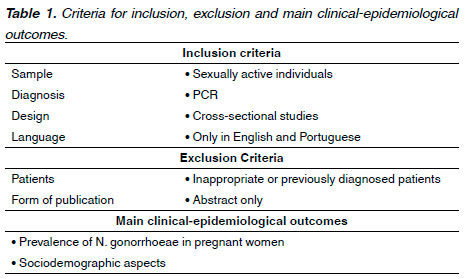
The search strategy used the following combinations of keywords: (Gonorrhea OR "Neisseria gonorrhoeae Infection" OR "Infection Neisseria gonorrhoeae" OR "Infections Neisseria gonorrhoeae" OR "Neisseria gonorrhoeae Infections") AND Prevalence AND Pregnancy. The inclusion and exclusion criteria for the selection of the reviewed studies are presented in Table 1.
RESULTS
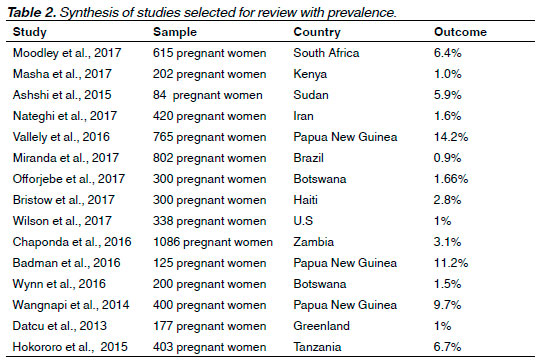
A total of 807 studies involving the prevalence of N. gonorrhoeae were identified. However, when we selected only the studies of the last 5 years we found 113 studies directly related to the theme proposed by the review that had their titles and abstracts read for the selection of the studies reviewed. Then, we included in the review 15 studies that are represented in the flowchart below (Figure 1) where we demonstrate the selection of the articles in stages and the data used for the production of table 2.
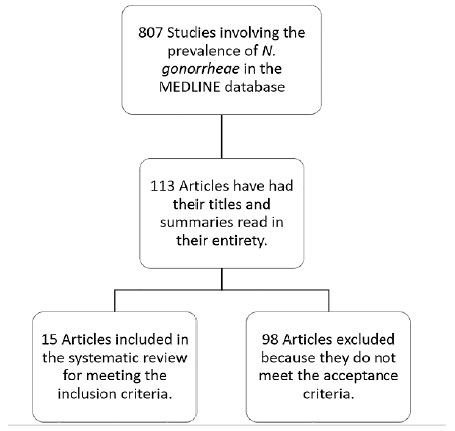 Figure 1. Study selection flowchart
Based on the content of the researched articles it became possible to evaluate the occurrence and distribution of N. gonorrhoeae in pregnant women during the last 5 years. It is possible to observe a gradual increase in the number of publications in the period evaluated, suggesting a greater concern with the consequences of N. gonorrhoeae infection during gestation (Figure 2).
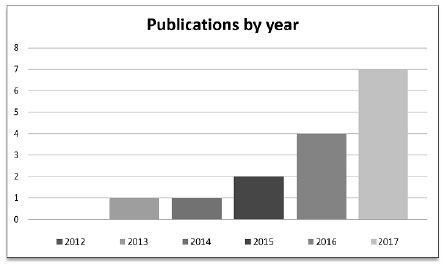 Figure 2. Disposition of articles selected for prevalence review by publication date.
Through the collected data it is possible to observe that a greater number of studies was developed in countries of the African continent and Papua New Guinea where the population of these countries is predominantly black.
DISCUSSION
The scientific production of the disease shows that, despite the fact that sexually transmitted infections can affect any individual, several demographic, social and behavioral factors influence their prevalence, such as age, ethnicity, presence of symptoms, gender and the test used for the diagnosis is more prevalent among black women aged 25 or younger and who have multiple partners 2, 25, 26.
Despite the high prevalence rates of sexually transmitted infections, they have lost their importance over the last few years and again represent a serious public health problem, especially after the exponential increase in the number of HIV cases and the consequent prioritization of the treatment of this STD in particular, it is possible to observe that despite the growing number of publications there is still a lack of recent data on the prevalence of N. gonorrhoeae among pregnant women in different parts of the world 24,27.
The diagnostic method for Neisseria gonorrhoeae used in the studies was the nucleic acid amplification test due to its high sensitivity and specificity, however, this is also a limitation for the correct estimation of the number of cases of N. gonorrhoeae because, as it is a high-cost method its use is often discarded in countries with limited resources 4,28.
In populations with different risk behaviors and sociodemographic characteristics, it is possible to identify that a significant increase in the number of cases is often associated with inappropriate condom use or non-use 29. Low et al., 2006 highlights that women are more vulnerable to infection primarily because of gender inequalities 26.
In both developed and developing countries, women often do not have the power to insist that the partner use condoms during intercourse, especially in cases of marriage where the woman uses other contraceptive methods or during pregnancy when its use cannot be justified for family planning purposes, thus increasing the chances of women's exposure to STDs 13,15,30.
The role of women in relation to sexual matters in many cases of submissiveness can be evidenced in the present study mainly on the African continent where vulnerability leads to inability to protect herself from an infected partner, causing significant damage to the sexual and reproductive health of women 8,23.
Social inequality and poverty increase this lack of power, as can be observed in studies involving New Guinea, which had the highest infection rates for N. gonorrhoeae, reaching 14.2% in the study by Vallely et al., 2016. These high rates can be justified because of low levels of literacy, especially among women, low economic power and the many early marriages found not only in New Guinea but also in African countries 2,5,11.
Despite the high level of sexually transmitted infections among pregnant women, studies involving N. gonorrhoeae are limited, although this infection is considered a risk factor for adverse neonatal outcomes and may lead to the risk of prematurity, fetal losses and restricted intrauterine growth 1. The World Health Organization (WHO) also highlights the transmission of Neisseria gonorrhoeae to the baby at birth, leading to ocular inflammation known as neonatal gonococcal ophthalmia, which can result in eyeball perforation and blindness 19.
Even with the current advances of the feminist movements, women still have a great disadvantage in terms of their sexual and reproductive rights, and cultural, structural and economic changes are necessary in order to achieve a true equality of rights between men and women 23.
CONCLUSION
The evident scarcity of data on the prevalence of N. gonorrhoeae in pregnant women from different parts of the world shows the need to identify the real global incidence of the disease, especially among black women, thus enabling its prevention and treatment.
REFERENCES
1. Moodley D, Sartorius B, Madurai S, Chetty V, Maman S. Pregnancy Outcomes in Association with STDs including genital HSV-2 shedding in a South African Cohort Study. Sex Transm Infect:sextrans-2017-053113.
2. Masha SC, Wahome E, Vaneechoutte M, Cools P, Crucitti T, Sanders EJ. High prevalence of curable sexually transmitted infections among pregnant women in a rural county hospital in Kilifi, Kenya. 2017PloS one;12(3):e0175166.
3. Ashshi AM, Batwa SA, Kutbi SY, Malibary FA, Batwa M, Refaat B. Prevalence of 7 sexually transmitted organisms by multiplex real-time PCR in Fallopian tube specimens collected from Saudi women with and without ectopic pregnancy. BMC infectious diseases2015;15(1):569.
4. Nateghi Rostami M, Hossein Rashidi B, Habibi A, Nazari R, Dolati M. Genital infections and reproductive complications associated with Trichomonas vaginalis, Neisseria gonorrhoeae, and Streptococcus agalactiae in women of Qom, central Iran. Int J Reprod Biomed (Yazd) Jun 2017;15(6):357-66.
5. Vallely LM, Toliman P, Ryan C, Rai G, Wapling J, Tomado C, et al. Prevalence and risk factors of Chlamydia trachomatis, Neisseria gonorrhoeae, Trichomonas vaginalis and other sexually transmissible infections among women attending antenatal clinics in three provinces in Papua New Guinea: a cross-sectional survey. Sexual health2016;13(5):420-7.
6. Miranda AE, Silveira MF, Travassos AG, TenÃ3rio T, Val ICCd, Lannoy Ld, et al. Prevalence of Chlamydia trachomatis and Neisseria gonorrhea and associated factors among women living with Human Immunodeficiency Virus in Brazil: a multicenter study. Brazilian Journal of Infectious Diseases2017;21(4):402-7.
7. Offorjebe OA, Wynn A, Moshashane N, Joseph Davey D, Arena K, Ramogola-Masire D, et al. Partner notification and treatment for sexually transmitted infections among pregnant women in Gaborone, Botswana. International journal of STD & AIDS2017;28(12):1184-9.
8. Bristow CC, Mathelier P, Ocheretina O, Benoit D, Pape JW, Wynn A, et al. Chlamydia trachomatis, Neisseria gonorrhoeae, and Trichomonas vaginalis screening and treatment of pregnant women in Port-au-Prince, Haiti. International journal of STD & AIDS2017;28(11):1130-4.
9. Wilson SP, Vohra T, Knych M, Goldberg J, Price C, Calo S, et al. Gonorrhea and chlamydia in the emergency department: Continued need for more focused treatment for men, women and pregnant women. The American journal of emergency medicine2017;35(5):701-3.
10. Chaponda EB, Chico RM, Bruce J, Michelo C, Vwalika B, Mharakurwa S, et al. Malarial infection and curable sexually transmitted and reproductive tract infections among pregnant women in a rural district of Zambia. The American journal of tropical medicine and hygiene2016;95(5):1069-76.
11. Badman SG, Vallely LM, Toliman P, Kariwiga G, Lote B, Pomat W, et al. A novel point-of-care testing strategy for sexually transmitted infections among pregnant women in high-burden settings: results of a feasibility study in Papua New Guinea. BMC Infect Dis 2016Jun 6;16:250.
12. Wynn A, Ramogola-Masire D, Gaolebale P, Moshashane N, Agatha Offorjebe O, Arena K, et al. Acceptability and feasibility of sexually transmitted infection testing and treatment among pregnant women in Gaborone, Botswana, 2015. BioMed research international;2016.
13. Wangnapi R, Soso S, Unger H, Sawera C, Ome M, Umbers A, et al. Prevalence and risk factors for Chlamydia trachomatis, Neisseria gonorrhoeae and Trichomonas vaginalis infection in pregnant women in Papua New Guinea. Sex Transm Infect:sextrans-2014-051670.
14. Datcu R, Gesink D, Mulvad G, Montgomery-Andersen R, Rink E, Koch A, et al. Vaginal microbiome in women from Greenland assessed by microscopy and quantitative PCR. BMC infectious diseases2013;13(1):480.
15. Hokororo A, Kihunrwa A, Hoekstra P, Kalluvya SE, Changalucha JM, Fitzgerald DW, et al. High prevalence of sexually transmitted infections in pregnant adolescent girls in Tanzania: a multi-community cross-sectional study. Sex Transm Infect2015;91(7):473-8.
16. Passos MRL. Doenças sexualmente transmissíveis (Dessetologia), 5ºEdição, ed.Cultura Médica, 2005.
17. Elmer W, Stephen DA, William M, Paul C, Washington C. Color atlas and textbook of diagnostic microbiology. Philadelphia: Lippincott; 1992.
18. HANDSFIELD HH, Wiesner PJ, Holmes KK. Treatment of the gonococcal arthritis-dermatitis syndrome. Annals of internal medicine1976;84(6):661-7.
19. Organization WH. Global prevalence and incidence of selected curable sexually transmitted infections. Overview and estimates Geneva: WHO2001.
20. Penna GO, Hajjar LAo, Braz TMe. Gonorrhea. Revista da Sociedade Brasileira de Medicina Tropical2000;33(5):451-64.
21. Gutman LT, Wilfert CM. Gonococcal diseases in infants and children. Sexually transmitted diseases New York: McGraw-Hill Inc1999;1146:82-1.
22. Low N, Sterne JA, Barlow D. Inequalities in rates of gonorrhoea and chlamydia between black ethnic groups in south east London: cross sectional study. Sexually transmitted infections2001;77(1):15-20.
23. Santos NJS. Mulher e negra: dupla vulnerabilidade as DST/HIV/aids2016. Saude e Sociedade;25:602-18.
24. Fleming DT, Wasserheit JN. From epidemiological synergy to public health policy and practice: the contribution of other sexually transmitted diseases to sexual transmission of HIV infection. Sexually transmitted infections1999;75(1):3-17.
25. DUARTE JnKdQ. Prevalencia da infeccao por Neisseria gonorrhoeae em adolescentes do sexo feminino no municipio de Goiania, Goias. 2008.
26. Low N, Broutet N, Adu-Sarkodie Y, Barton P, Hossain M, Hawkes S. Global control of sexually transmitted infections. The Lancet2006;368(9551):2001-16.
27. CAMPOS E, GARCIA OEG, BARBOSA MJ. Prevalencia da infeccao por clamidia e gonococo em gestantes de seis cidades brasileiras. Rev bras ginecol obstet2008;30(12):614-9.
28. Davey DJ, Shull H, Billings J, Wang D, Adachi K, Klausner J. Prevalence of curable sexually transmitted infections in pregnant women in low-and middle-income countries from 2010 to 2015: a systematic review. Sexually transmitted diseases2016;43(7):450-8.
29. GRAVATA A, CASTRO R, BORGES-COSTA Jo. Estudo dos Fatores Sociodemograficos Associados a Aquisicao de Infeccoes Sexualmente Transmissiveis em Estudantes Estrangeiros em Intercambio Universitario em Portugal. Acta Medica Portuguesa2016;29(6).
30. Swartzendruber A, Brown JL, Sales JM, Murray CC, DiClemente RJ. Sexually transmitted infections, sexual risk behavior, and intimate partner violence among African American adolescent females with a male sex partner recently released from incarceration. Journal of Adolescent Health;51(2):156-63.