
INTRODUCTION
Human beings consider themselves a superior species. However, a microscopic being demonstrates its dominance, as shown by the theory of natural selection of species (1,2). Bacteria, viruses, and other microorganisms have caused damage equivalent to wars or regional and global economic crises(2). One could start with reports of the “first great pandemic”. However, it is essential to differentiate between the terms epidemics, endemics, pandemics, and outbreaks. An outbreak is characterized by a sudden increase in the number of cases of a certain disease, within very specific limits. An epidemic is an increase in the number of cases of a disease, in relation to a percentage higher than expected, without regional delimitations. Endemic is characterized by the number of controlled cases in a given region. And, finally, the pandemic consists of an extraordinary increase in the number of cases between continents and is related to a global structure(3,4).
According to the literature, viruses are obligatory intracellular parasitic beings presenting no cellular structure, that is, they need to parasitize a being to multiply. Viruses have a lipoprotein capsule and, as genetic material, molecules of deoxyribonucleic acid (DNA) or ribonucleic acid (RNA), both surrounded by a protein membrane, called capsid. The proteins that make up the capsid vary between each type of virus, which allows them to be differentiated. Furthermore, the types of proteins that are found in viruses determine which cell types that virus can infect(5-9).
The viral structure is based on the capsid, molecules of genetic material, and the layer of envelopes composed of lipoproteins, normally phospholipids or cholesterol, which are derived from the cell membrane during the budding process, as illustrated in Figure 1. The infection cycle of the virus can be of two types: lytic and lysogenic. From the lytic cycle, the virus infects the cell and introduces its genetic material, thus having total control over it, reproducing new viruses that, after breaking the cell membrane, infect new cells. In the lysogenic cycle, the genetic material of the virus is incorporated into that of the cell and, as soon as it reproduces, it will generate new infected cells(5-9)
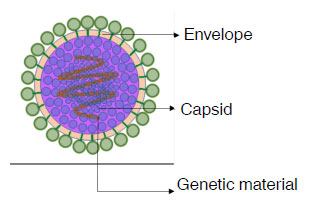
Figure 1: Schematic structure of viruses.
Every living being is made up of DNA and/or RNA molecules, when this being reproduces, the respective molecules also reproduce. Being duplicated, however, if there is any error during duplication, both in DNA and in RNA transcription, a single change in nitrogenous base (adenine, thymine, cytosine, guanine, uracil) is enough to modify that being to some extent. From the mutation of the nitrogenous base that makes up the genetic code, the being becomes different from its predecessor, thus having favorable or unfavorable characteristics(5-9).
Considering the mutation of living beings, viruses that are normally composed of an RNA molecule, in their transcription, are capable of undergoing genetic mutation, becoming more resistant than before. This mutation can transform the virus into a particle that the host body may not identify as an invader, therefore, it does not create antibodies to stop it. According to the genetic variability of viruses, due to the countless possible mutations, it is becoming increasingly difficult to find an effective vaccine or drug to combat this parasite(5-9).
In the book The Origin of Species, Darwin reports on the theory of natural selection, which consists of the survival of the being best suited to the environment in relation to those that are unfavorable to survival. Factors that can lead to the extinction of a being are temperature, environment, geographic location, mutation, and reproduction. Darwin argued that the variation of a species more adapted to the environment would survive the given conditions, therefore, through mutations within their genetic material, viruses reproduce and, increasingly, modify their genetic material in order to become adapted to the environment in which they live. Considering that viruses are obligatory parasitic intracellular beings, the only way for them to survive is by parasitizing another living being, whether animal or plant. As a result, the virus reproduces through the lytic and lysogenic cycles, with mutations necessary for its survival(7-9).
THE GREAT VIRAL INFECTIONS
Among the major well-documented episodes of viral infections, we can mention Smallpox, Poliomyelitis, Spanish Flu, Measles, Ebola, Acquired Immune Deficiency Syndrome (AIDS), Severe Acute Respiratory Syndrome (SARS), Swine Flu (H1N1), and, the most current of them, Covid-19. Figure 2 presents a chronological line of the events mentioned to facilitate the historical monitoring of infections.
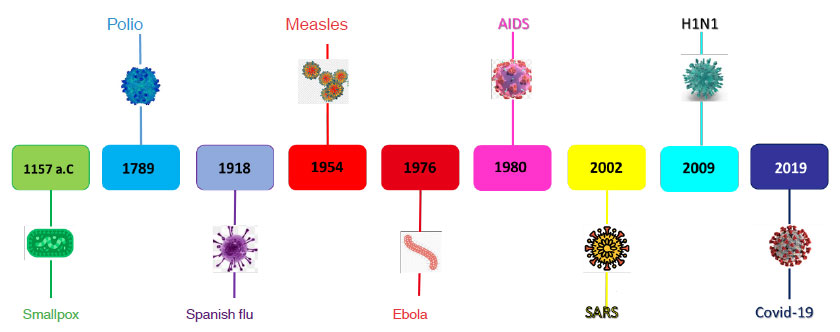
Figure 2: Chronological order of major viral infections.
Smallpox
The Orthopoxvirus virus (Poxvirus variolae), from the Poxviridae family, is the causative agent of Smallpox. The disease is known worldwide for killing 30% of its infected population during the time of transmission, making it one of the deadliest viruses in the world. Smallpox has existed since ancient history, there are reports that traces of the disease were found in the skull of a pharaoh from the 18th Egyptian dynasty (1580-1350 BC), and since then, it has been infecting thousands of people. At the end of the 18th century, smallpox was responsible for the deaths of around 400,000 people in the East(10,11).
Its main forms of transmission are through contact with the virus, through droplets released when speaking, coughing, and sneezing. It has the characteristic of contaminating surfaces and clothes, but it is the least effective form of contagion. Its main symptoms are fever, mouth ulcers, and skin blisters filled with liquid, among others(10,11).
Considering that smallpox was one of the biggest global pandemics, in the 20th century, the search for a vaccine began. The evolution of medicine, at the time, meant that the first vaccine approved worldwide was that of smallpox, completely eradicating it (1980) through the mass vaccination campaign. To date, there are records of more than 300 million deaths(10,11).
Polio
Poliomyelitis is caused by the Poliovirus. The discovery of the polio vaccine was in 1960, so there is an estimate that the virus has been around for a long time. However, the first clinical description occurred in 1789. Considered a pandemic, it is responsible for paralysis in children who lived in the 19th and 20th centuries, with the usual name “infantile paralysis” (12-15).
Its transmission occurs through personal contact, generally through fecal-oral contact, through contaminated food and objects, or through exposure to droplets of oral secretion. The first symptoms are demonstrated until the third day of infection with the virus, they are mainly fever, malaise, headaches, etc. In the worst cases of the disease, there is the presence of paralysis of certain parts of the body (12-15).
Typically, the disease is persistent among children. Soon, after the discovery of the vaccine, in 1960, it became mandatory to administer the vaccine dose from two to 15 months of age. After the inclusion of the vaccine in the basic vaccination schedule, polio was eradicated on the American continent in 1994. Without treatment, the only way to deal with the disease is through vaccination (12-15).
Spanish Flu and H1N1
The Spanish flu and H1N1 were allocated to the same topic because both the Spanish flu pandemic, which occurred at the beginning of the 20th century (1918), and the swine flu, which had its first case reported in 2009, are variations of the Myxovirus virus influenza (16-18). The ability of the influenza virus to mutate is so high that most cases of pandemics and outbreaks, in several countries, occur due to a new mutation of the causative agent (2,7).
Starting with a chronological line, in 1918, the first cases of Influenza occurred in Western Europe, from that moment on, with the microbiological ignorance of the disease and without knowing forms of treatment due to the technology of the time, the Spanish flu became a pandemic in a short time, causing around 20 to 40 million deaths among the world population (16-18). One of the main reasons that led to the inevitable increase in cases and deaths was the First World War (1914-1918), the return of the army that was fighting in the war to their respective countries was the factor that led the virus to spread across continents. The soldiers who were at war took the agent that caused the disease to their countries of origin, causing a high number of infections (16-18).
From then on, many variations of the virus emerged and, in 2009, another pandemic occurred, but now called H1N1. Since the first case of the disease, it was considered a level 6 pandemic and caused approximately 12,800 deaths worldwide in 2009, approximately 76.9 deaths per 10 thousand inhabitants (16-18). To date, around 5 to 15% of the global population has been infected, with a number ranging from 250 to 500 thousand deaths worldwide (16-18).
Since they are caused by variations of the same virus, both diseases are transmitted by droplets from sneezing, speaking, or coughing, and through contact with an infected surface. Its symptoms are very similar in both diseases, both present fever, fatigue, muscle pain, and shortness of breath. In this way, the treatment is similar. Annual vaccination against the influenza virus is what prevents it from becoming another pandemic again. In view of this, the main prevention is the habit of hand hygiene, use of 70% alcohol, avoiding crowds, not bringing your hands into contact with your eyes and mouth, and not sharing personal objects with other people (16-18).
This fact is a good demonstration of the capacity for variation present in viruses, largely due to their structural simplicity, which we mentioned previously. Furthermore, this virus variation event that caused two different diseases also points to the fact that these are beings that, undergoing mutations, are always subject to and will respond to environmental influences. Considering that the environment to which viruses are exposed (during their parasitic phase) is the interior of the host’s body, this means that they are always facing adaptive challenges, which push them to cause different diseases.
Measles
Discovered in 1954, measles is a serious acute viral disease caused by the Measles morbillivirus. Measles killed around 140,000 people in 2018(19-21). With a high mortality rate, it is one of the main diseases that kill on the African continent.
The transmission vehicle for this disease is speaking, coughing, and sneezing. Measles has a very high transmission link, and can also present complications such as pneumonia, otitis media, and diarrhea. Its main characteristic is the appearance of red spots on the body(19-21).
One of the main causes of child mortality is measles. Unfortunately, there is no treatment against the virus, however, the only method of prevention is the vaccine, which is administered at the birth of the child or through the triple viral and double viral vaccines, administered to any age group(19-21).
Ebola
Since 1976, West Africa has suffered the largest Ebola outbreak of the 20th century. Ebola is a serious and fatal viral disease, its causative agent is the virus of the genus Ebolavirus, which is identified in five types of categories, represented by the name of the place where the outbreak occurred, Zaire, Sudan, Taï Forest, Bundibugyo and the Reston. The virus has a mortality rate of around 90%, making it one of the most lethal in the world (22,23).
The disease does not have a vaccine, its origin is still unknown and it is transmitted through contact with bodily fluids, objects, and contaminated needles. From the moment the virus manifests itself in the body, evolution is rapid. In the first days of infection, the symptoms are similar to those of a common flu, however, with greater evolution of the virus in the body, there is hemorrhage of mucous membranes in the skin and liver damage, causing the patient’s death within 10 days (22,23).
In countries where there is a greater prognosis for the disease, the best form of prevention is to avoid contagion with the blood of sick animals or people, or with people whose death came from a virus infection, which is also transmitted in such a way(22,23).
AIDS
Acquired immunodeficiency syndrome, also known as AIDS, is a disease that affects a large part of the population, and until 2012, around 35.3 million people had AIDS. Its appearance was in the 1980s and, after that, it was classified as a public health problem(24,25).
Considered a viral disease, the HIV virus (Human Immunodeficiency Virus) is the main causative agent of the disease. Its contagion occurs through unprotected sexual intercourse with a carrier, blood transfusion, common use of injectable drugs, syringes, and hospital needles, and from mother to child during childbirth(24,25).
The syndrome is characterized by a decrease in CD4+ lymphocytes, causing a drop in the carrier’s immunity, leading to death. Its main symptoms are fever, spots on the body, and muscle pain, among others. In the most advanced phase of the disease, the appearance of numerous serious illnesses can occur, such as pneumonia and infectious diseases, as the patient has a major deficiency in his immunity(24,25).
The main form of treatment is through a cocktail of medications that can be prescribed to carriers. Furthermore, it is necessary to take into account the importance of using condoms during sexual intercourse, not sharing syringes and needles, prohibiting blood donations from people with the disease, and taking care to ensure that the virus will not be transmitted from mother to child during childbirth, which can be favored through efficient prenatal care(24,25).
SARS and the current Covid-19 pandemic
“If you think of anything that could come along that would kill millions of people, a pandemic is our greatest risk. In terms of mortality, a pandemic would compete even with the colossal wars of the past. The economy would come to a halt, the costs to humanity would be unbelievable and no country would be immune to the problems that this would entail.” – Bill Gates, May 2019, reported in a Netflix documentary, before the first case of Coronavirus.
We can start by describing the main characteristics of the new Coronavirus, where the first case occurred in Wuhan, China. It can be described as a zoonotic virus, which is that transmitted from animals to humans.
The SARS virus (Severe Acute Respiratory Syndrome) emerged through live food animal markets in China and killed around 10% of those infected. Since the first virus crisis in 2002, large-scale research has been performed into so-called zoonotic viruses. Since then, a virus called bat Coronavirus RaTG 13 (bat coronavirus) was found, characterized as a low-risk virus, after sequencing the Coronavirus genome, we have around 96% similarity, that is, these two viruses are practically identical (26).
About Covid-19, the official name of the virus is SARS-CoV-2, Covid-19 is the name of the disease that the virus causes. “Corona” comes from “crown”, a physiological characteristic of the virus, which is the presence of spikes in its capsule. It is transmitted through droplets through speaking, sneezing or coughs, which can then penetrate another person through the eyes, mouth, or nose. In addition, SARS-CoV-2 is highly resistant to contact surfaces, that is, it survives for a long time on inanimate surfaces and can become viable and infect people through hand contact with the infected area, carrying viral particles to the touch of their own face. The main symptoms of the new Coronavirus are high fever, cough, and fatigue. In the most serious cases, loss of appetite, diarrhea, and shortness of breath, which can lead to death (26-28).
Another extremely important fact is that, unlike SARS-CoV, SARS-CoV-2 is capable of causing disease without causing any symptoms, the so-called asymptomatic patients. An infected person will infect other people who must infect more other people, thus generating an exponential function (26,28).
Some people experience serious respiratory problems after being infected with the virus, and people who have an autoimmune disease or a pre-existing disease are more likely to become infected, such as diabetes (ICD 10 - E11), diseases characterized as respiratory, for example, asthma and heart diseases such as cardiomyopathy (29).
The risk of mortality from Covid-19 is higher among older people due to the presence of some diseases such as those mentioned above, however, for reasons that are not yet clear, infection with the new Coronavirus occurs in the majority of men. It may be due to biological factors, as they are more likely to smoke, or because they do not have the habit of washing their hands (26).
Based on an exclusive interview with infectious disease Dr. Clara Vidaurre Mendes (CRM 159248 – SP), who has been working since the beginning on the front line of the Instituto de Infectologia Emílio Ribas in São Paulo, the theoretical basis is that the main presented symptoms of the disease are symptoms of mild colds, such as runny nose, sore throat and sneezing, and can manifest itself in a more serious form, thus presenting lung involvement causing a cough, generally dry, and shortness of breath. Furthermore, the main factors that lead to the death of patients are the so-called “Inflammatory Storm”, which is a reaction of the body in order to combat the existing pathogen, and blood clotting, which causes thrombi in the most varied organs of the body, in this case mainly lungs, kidneys, brain, and heart, thus leading to the death of cells in these organs and also causing the death of the individual. (Personal communication, Clara Vidaurre Mendes1).
It is important to note that asymptomatic patients or those with mild symptoms are the main passive transmitters of the disease. Therefore, preventive measures must be taken, such as the use of masks in closed and open environments, good hand hygiene with the use of soap and water, or the application of 70% alcohol in liquid or gel form.
Brazil can be compared to developing countries or even the most developed ones, however, the big difference is the mass testing of the population. In more developed countries such as Germany, Japan, Sweden, and the USA there has been an increase in the number of tests on the population, as the country has funds for this. Brazil does not have enough funds for mass testing of the population, with insufficient public laboratories offering the test. Unfortunately, testing of people with severe symptoms and healthcare professionals is prioritized, meaning that a large part of the low-income and asymptomatic population is not tested (30).
With this, the importance of social isolation is highlighted, which constitutes a barrier to the spread of the virus, thus preventing a greater number of infected people (31).
Given all the pandemics mentioned, the current Covid-19 pandemic can be compared to the Great Spanish Flu, at the beginning of the 20th century, which had repercussions just like those of today. Furthermore, the influenza virus crisis in 2009 can be compared to the current one, but it did not present a high fatality rate compared to the current one.
TYPES OF PREVENTION
Considering what has been exposed so far, especially with regard to the forms of transmission and structure of viruses, the best way to prevent viral diseases is through good hand hygiene. Soap and 70% alcohol are responsible for dissolving the viral lipoprotein capsule, which makes the virus unviable. Quarantine, a procedure that emerged when the bacterial disease known as bubonic plague occurred, consists of restricting people’s movement to avoid contact with the pathogen that is transmitted to other individuals, within a certain time within the maximum period of incubation of the disease, preventing further spread of the disease.
Quarantine, which includes social distancing and reducing people’s movement through changing routines or even interrupting various daily activities, is currently one of the main factors responsible for preventing infection with the virus. The weakening of quarantine in some countries highlights its importance, as the number of cases increases significantly in such countries(31).
Furthermore, in many Brazilian cities, the use of masks has become mandatory. Considering the type of transmission of the virus, masks block droplets expelled through the nose and mouth, thus preventing a higher rate of infection(32,33).
Therefore, the vaccine against Covid-19 is already underway. National Institutes such as the Butantan Institute and the Oswaldo Cruz Foundation have formed partnerships with companies that produce API (Active Pharmaceutical Ingredient) so that they can begin producing the vaccine in the Brazilian environment. Considering its mechanism in the body - being the application of deactivated viral material in the body, so that antibodies are produced in humans - the difference between the Sars-Cov-2 vaccine is the innovation of the pharmacological technology used to produce it from viral genetic material, which is of the RNA type, something completely innovative in the pharmaceutical industry(34).
METHODOLOGY
The present study was based on a review of the literature on virology, both regarding historical pandemic events, elucidating their form of contagion and their social impact, and regarding searches performed in databases of articles, websites, textbooks, interviews, and scientific research, using as inclusion criteria, documentaries in Portuguese and English available in full for free.
FINAL CONSIDERATIONS
There is a false sense that human beings are superior to other species. However, microscopic beings can cause global impacts, harming the economy, the structure of health agencies, and society in general.
A historical analysis of pandemic events exposes these impacts and highlights the search for viruses to maintain themselves as beings subject to environmental influences. Considering that viruses are obligatory intracellular parasites, epidemics can be related to an attempt by the virus to adapt to the environment in which it is inserted (the host’s body), making a relationship with Darwin’s Theory of Natural Selection of Species.
Furthermore, we have as historical facts presented during the period of human history, the various pandemics and epidemics caused by viruses, namely HIV-1, HIV-2, Measles morbillivirus, H1N1, Ebolavirus, Orthopoxvirus variolae, Influenzavirus, Poliovirus and SARS-CoV-2. It is reported how each virus propagates in the environment in the given disease presented and thus, it can be noted that, even if the virus is trying to live, reproducing for its sole and exclusive survival, in relation to society, can cause serious damage.
For a reduction in cases of viral diseases to occur, good hygiene of hands and contact surfaces must be taken as a prerequisite, as the degradation of the viral lipoprotein capsule occurs through the use of disinfectants, detergents and 70% alcohol, which kills the virus. In addition, the importance of social isolation, the use of masks and the immunization of the population to prevent viral spread must be taken into account.
REFERENCES
1. Darwin Charles. On the Origin of Species. Traduced André Campos Mesquita. Escala. 2009
2. Super Interessante - Redação. As Grandes Epidemias ao longo da história. Super Interessante 2020. Available from: URL As grandes epidemias ao longo da história | Super (abril.com.br). Accessed july 2020
3. Telessaude São Paulo. Qual é a diferença entre surto, epidemia, endemia, pandemia e sindemia? Telessaude São Paulo 2021. Available from: URL Telessaúde São Paulo - Unifesp - Qual é a diferença entre surto, epidemia, endemia, pandemia e sindemia ?. Accessed august 2020
4. Satie Anna. Qual a diferença entre epidemia e pandemia?. CNN Brasil 2020. Available from. URL Qual a diferença entre epidemia e pandemia? | CNN Brasil. Accessed august 2020
5. Só biologia. Vírus – Vírus são os únicos organismos acelulares da Terra atual. Só Biologia 2007 – 2022. Available from: URL Vírus - Só Biologia (sobiologia.com.br). Accessed july 2020
6. Santos Vanessa. Vírus. Biologia Net 2020. Available from: URL Vírus: características gerais, estrutura, viroses - Biologia Net. Accessed july 2020
7. Rede Globo. Como os vírus sofrem mutação?. Rede Globo 2013. Available from: URL Rede Globo > quero saber - Como os vírus sofrem mutação?. Accessed july 2020
8. Carvalho Irineide. Microbiologia básica. EDUFRPE. 2010
9. Krug Robert, Wagner Robert. Virus. Britannica 2022. Available from: URL | vírus Definição, Estrutura e Fatos | Britannica. Accessed july 2020
10. Levi Guido, Kallás Esper. Varíola, sua prevenção vacinal e ameaça como agente de bioterrorismo. Rev Assoc Med Bras 2002; 48(4) : 357-362
11. Toledo Jr Antonio. Smallpox history. Rev Med Minas Gerais 2005; 15(1): 58-65
12. Neto Fernando. The beginning of the endo of polio: 60 years of vaccine development. Rev Pan-Amaz Saude 2015; 6(3): 9-11
13. Scientific American Brasil. Estratégias de Controle da Poliomielite no Brasil. Scientific American Brasil 2020. Available from: URL Estratégias de Controle da Poliomielite no Brasil – Scientific American Brasil (sciam.com.br). Accessed august 2020
14. FIOCRUZ. Poliomielite: sintomas, transmissão e prevenção. FIOCRUZ 2022. Available from: URL Poliomielite: sintomas, transmissão e prevenção - Bio-Manguinhos/Fiocruz || Inovação em saúde || Vacinas, kits para diagnóstico e biofármacos. Accessed august 2020
15. Silveira Bárbara, Bentes Aline, Andrade Maria Clara, Carvalho Andrea. Update on polyomylitis. Rev Med Minas Gerais 2019; 29 (13): S74 – S79
16. Silveira Anny. Medicine and the 1918 Spanish influenza. Tempo 2005; 10(19): 91-105
17. Neto Eduardo, Halker Eliza, Santos Verônica, Paiva Terezina et al. Influenza. Revista da Sociedade Brasileira de Medicina Tropical 2003. 36(2): 267-274
18. Bellei Nancy, Melchior Thaís. H1N1: overview and perspectives. J Bras Patol Med Lab 2011; 47 (6)
19. FIOCRUZ. Sarampo: sintomas, transmissao e prevenção. FIOCRUZ 2022. Available from: URL Sarampo: sintomas, transmissão e prevenção - Bio-Manguinhos/Fiocruz || Inovação em saúde || Vacinas, kits para diagnóstico e biofármacos. Accessed august 2020
20. Xavier Analucia. Rodrigues Thalles, Santos Lucas, Lacerda Gilmar et al. Clinical, laboratorial diagnosis and prophylaxis of measles in Brazil. J Bras Patol Med Lab 2019; 55 (4): 390 – 401
21. OPAS. Mais de 140 mil morrem de sarampo no mundo à medida que casos aumentam. OPAS Brasil 2019. Available from: URL OPAS/OMS Brasil - Mais de 140 mil morrem de sarampo no mundo à medida que casos aumentam (paho.org). Accessed august 2020
22. Yuill Thomas. Infecções por vírus de Marburg e Ebola. Manual Msd – Versão para profissionais de Saúde 2021. Available from: URL Infecções por vírus de Marburg e Ebola - Doenças infecciosas - Manuais MSD edição para profissionais (msdmanuals.com). Accessed august 2020
23. Schütz Gabriel, Sampaio João. The 2014 Ebola virus disease epidemic: the International Health Regulations in the perspective of the Universal Declaration of Human Rights. Cad Saúde Colet 2016; 24(2): 242-247
24. Dantas Mariana, Fátima Abrão, Costa Solange, Oliveira Denize. HIV/AIDS: meanings given by male health professionals. Esc Anna Nery Rev Enferm 2015; 19(2): 323-330
25. Ministério da Saúde. Aids: etiologia, clínica, diagnóstico e tratamento. Coordenação Nacional Doenças Sexualmente Transmissíveis e Aids 1999.
26. EXPLICANDO... o Coronavirus (Temporada 1, ep. 1-3). Direção: Claire Gordon. Produção: Joe Posner, Ezra Klein, Chad Mumm, Mark W. Olsen, Sara Masetti, Sam Ellis e Marie Cascione. Produtora: Vox Media. Distribuidora: Netflix, 2020.
27. McIntosh Kenneth. Doença de coronavírus 2019 (COVID-2019). Available from: URL 4-corona-virus-up-to-date-31-03.pdf (www.gov.br). Accessed august 2020
28. Viego Valentina, Milva Geri, Castiglia Juan, Jouglard Ezequiel. Período de incubación e intervalo serial para COVID-19 em uma cadena de transmisión em Bahia Blanca (argentina). Ciéncia saúde coletiva 2020. 25(9): 3503-3510
29. Dw. A evolução da pandemia da covid – 19. Dw 2020. Available from: URL A evolução da pandemia de covid-19 – DW – 30/10/2020. Accessed setember 2020
30. Magno laio, Rossi Thais, Mendonça-Lima Fernanda, Santos Carina et al. Desafios e propostas para ampliação da testagem e diagnóstico para COVID-19 no Brasil. Ciênc saúde coletiva 2020; 25(9): 3355-3364
31. Natividade Marcio, Bernardes Kionna, Pereira Marcos, Miranda Samilly et al. Social distancing and living conditions in the pandemic COVID-19 in Salvador – Bahia, Brazil. Cien Saúde Colet 2020; 25(9): 3385-3392
32. Santos Helivania. Quarentena. Biologia Net 2022. Available from: URL Quarentena: o que é, origem, casos recentes - Biologia Net. Accessed september 2020
33. Camargo Maria, Martines-Silveira Martha, Lima Adeânio, Bastos Bruno et al. Eficácia da máscara facial (TNT) na população para prevenção de infecções por coronavírus: revisão sistemática. Ciên saúde coletiva 2020; 25(9):3365-3376
34. Guimaraes Reinaldo. Vacinas Anticovid: um Olhar da Saúde Coletiva. Ciênc saúde coletiva 2020; 25(9): 3579-3585
1 Comunicação pessoal, Clara Vidaurre Mendes, Instituto de Infectologia Emílio Ribas.