
RATIONALE
Classically, it has been shown in scientific literature that regular physical exercise provides numerous benefits, such as improvements in physiological systems related to the cardiorespiratory, muscular, endocrine and nervous systems.1 Besides these benefits, the psychological aspect is also benefited by this practice, with obvious impacts on psychobiological factors reflected by a reduction of scores indicative of depression and anxiety, and improvements in cognitive function, resulting in an improved quality of life.14
Even considering such benefits, a body of evidence has been indicating that, when practiced compulsively, exercise may result in negative changes.5,6 Such compulsion can be referred to as an uncontrollable urge to exercise, which relates to a condition known as physical exercise dependence. Once prevented from performing this activity, the individual can develop several negative changes, both physiological and psychological.6,7
The first report on the effects of exercise deprivation date from the 1970s and already demonstrated mood changes with the development of different symptoms.8 Later studies, even when using the different methodologies and populations, also found the development of both physical and psychological symptoms in individuals who had been deprived of physical exercise.6,9 Taking that into account, understanding these symptoms may help to identify the level of dependence and help to control the compulsion to exercise.
Therefore, this article aims to address the main effects and symptoms developed during physical exercise deprivation.
MATERIAL AND METHODS
The study was established as a systematic review on the effects and symptoms of physical exercise deprivation. The following were used as sources: books on the subject and specific scientific papers available and indexed on PubMed ISI and Medline, Scienc Direct, Cochrane, Ebsco Host, Ingenta Connect and Scopus, from 1970 to 2009.
Papers published in English and/or Portuguese were used, and for the bibliographic search the following keywords were used: "exercise deprivation", "overtraining", "exercise dependence", "exercise withdrawal", "exercise addiction", using specific Boolean for these bases in order to obtain various arrangements and maximize both the scope and the quality of the search.
Article selection followed the inclusion criteria: (a) research with physical exercise deprivation in physical exercise non-dependent and dependent individuals, (b) studies that used exercise deprivation methodology. Animal studies were not considered, nor were those developed for dissertation or thesis, being that our limitation.
Through the above mentioned keywords, 3053 papers were found, of which 123 were eligible for this review. However, 60 studies had no information related to symptoms and effects of exercise deprivation, so 63 works, being 4 books and 59 scientific articles (including 12 review articles and 47 original articles) were used for the final composition.
First report on physical exercise deprivation
The first report on physical exercise deprivation was done by Baekeland in 1970.8 In the study, the author aimed to examine the effects of a month of physical exercise deprivation on sleep patterns and psychological well-being of physically active subjects. However, he found great difficulty in recruiting volunteer runners who exercised five to six days per week and who were willing to abstain from physical exercise for a month. This difficulty remained even when financial incentives were offered to volunteers, and only individuals who regularly ran three to four days a week could be included in the study. During a month of exercise deprivation, the participants reported a reduction in psychological well-being, experiencing various symptoms during deprivation, such as increased tension, increased number of awakenings during sleep, sexual tension and anxiety.8
This difficulty faced by the author and the attempt to understand why some people refused to go without physical exercise even when offered a financial incentive was the basic point of studies involving dependence and lack of exercise, and represents the basis for all research that ensued. It represents a landmark for the research on physical exercise deprivation.
Symptoms and effects of physical exercise deprivation in dependent and non-dependent
The practice of regular exercise produces positive results that have both physiological and psychological impact. However, the deprivation of this activity results in negative changes that impairs physiological and psychological aspects and the quality of life.9 These changes are related to the development of symptoms and negative feelings that may result in behavioral changes, physiological changes, and mood disorders during withdrawal of the compulsive behavior, being more evident in individuals who present the characteristics of physical exercise dependence.9-12 Before describing the effects of deprivation in individuals with physical exercise dependence it is important to conceptualize this behavior to enable a better understanding of how the compulsive practice of this activity can influence the psychosocial behavior of that individual.
Physical exercise dependence is defined as "a craving for physical activity that results in an uncontrollable need to exercise and that manifests itself in physiological behavior and/or psychological symptoms".6,13,14 It can be characterized as an obsessive and unhealthy concern with physical exercise,15 however, its causes are not well described. Nevertheless, it is a multifactorial behavior and may become a determining factor in behavior, as the individual develops an uncontrollable need to exercise, regardless of social, professional, behavioral and physiological problems.6,13,14
Based on this, a study by Antunes et al16 with adventure racers, noted that they had exercise dependence scores, but did not present indications of mood changes, which is consistent with the study by Rosa et al., which also found no differences in this parameter before and after performing an exercise test until maximum exhaustion. This suggests that there were no mood changes in the groups studied,17 as the study used volunteers who were: physical exercise dependent, non-dependent, and sedentary.
It is important to consider that exercise dependence may occur from two perspectives, the first known by the term "positive addiction," which describes that the individual uses the exercise as a tool with increasing doses to obtain feelings of euphoria and well-being18, and the second is known by the term "negative addiction", which is opposed to the first, and where the individual may increase physical activity in order to lessen feelings of distress, anxiety, depression and irritability.19 In the studies by Antunes16 and Rosa17 the sample was not deprived of exercise, which would potentially involve the emergence of negative mood symptoms, as well as helping to understand of degree of physical exercise dependence, and that could justify the results found by the authors.9-11,20
It seems indeed that the symptoms of physical exercise dependence are closely related to the deprivation of this activity. This seems to be more evident when we look at the criteria described to characterize physical exercise dependence, including a few related to exercise deprivation, such as:
- Withdrawal symptoms related to mood disorders (irritability, depression, anxiety, etc.), when exercise is discontinued;
- Relief or prevention of withdrawal syndrome onset by means of physical exercise and rapid resumption of previous exercise patterns;
- Withdrawal symptoms after a period without physical exercise.14
In their study, Hausenblas et al. analyzed the possible diurnal mood variation during physical exercise deprivation. The authors observed that when deprived, volunteers with lower levels of exercise dependence did not developed mood changes that could be expressed by high scores on these measurements. However, volunteers with higher levels and symptoms of physical exercise dependence showed higher changes in that variable under the same conditions, developing a behavior similar to the days when there was no exercise training.20 Results like these show that the physiological and psychological effects that occur during physical exercise deprivation can help to identify components of exercise dependence.9,14,21
The classic study by Sachs & Pargman reports that the onset of deprivation symptoms on exercise-dependent individuals occurs 24-36 hours without the practice, and is shown by: anxiety, agitation, guilt, irritability, tension and discomfort.22 On the other hand, the study by Mondin et al. suggests that during the 24-48 hour period of exercise deprivation it is already possible to observe the development of mood disorders and decreased vigor.23
In addition to these changes developed by physical exercise deprivation, some studies show that often the individual with compulsion to exercise may perform two or more training sessions per day to ameliorate or diminish the negative symptoms, and excessive training may contribute to the emergence of overtraining.24 Therefore, when the physical exercise dependent individual is prevented from training, he/she may develop negative physiological and psychological symptoms and changes.14 From this, it is possible to hypothesize that the emergence of overtraining in physical exercise dependent individuals may contribute to the worsening of symptoms related to changes in behavior, physiological changes and mood disorders, when the individual presents symptoms of overtraining, and needs to discontinue physical exercise.
It is important to mention that studies on physical exercise dependence and withdrawal have suggested that the symptoms observed with lack of exercise appear to be similar to the symptoms developed during withdrawal of an addictive substance, and the most obvious include: irritability, anxiety, depression and guilt.6,25,26
Although the effects of regular physical exercise lead to psychological improvements, such as decreased anxiety, depression and feelings of anguish,27,28 the above mentioned evidence shows that deprivation of this activity can cause unpleasant symptoms. These symptoms seem to persist even when different sports are analyzed. A study with runners has shown mood changes when there is physical exercise deprivation.29 Also focusing on this population, Anshel30 noted that deprived runners or runners who were unable to exercise presented symptoms such as irritability, frustration, guilt, depression, sleep problems, endocrine problems, pain and muscle tension. Meanwhile, Szabo & Parkin31 analyzed a sample of martial artists (Shotokan Karate) and also able observed the onset of negative symptoms over a period of deprivation, such as anger, depression, tension, frustration, guilt, anxiety, hostility, total mood disturbance and a decrease in positive aspects such as vigor, happiness and joy.31 Deprivation symptoms were also observed in participants who practiced swimming, cycling and running; the study was conducted for five days, and participants were deprived of exercise from days 2-4 and exercised on the first and last days the study. The results revealed that there were mood changes with the development of symptoms such as increased tension, depression, anxiety and a decrease in vigor during deprivation.23
In relation to gender, apparently there is no consensus on the magnitude of the effects of deprivation. According to Robbins & Joseph29, women may report more difficulty with the development of symptoms such as irritability, frustration, guilt and depression during the period of exercise deprivation, due to the fact that they use this activity to combat daily stress. On the other hand, Crossman32 et al., suggest that men may have increased discomfort when they interrupt their training programs. However, other studies suggest that both genders may present a decrease of positive aspects and an increase of negative symptoms during exercise deprivation.31,33
Many speculations have been made in an attempt to explain the symptoms of deprivation. Berlin, Kop & Deuster34 used an experimental group composed by non-exercise dependent individuals that were deprived of physical exercise for 7 days, and observed the previously described symptoms. The authors argued that perhaps the relationship between decreased training and the onset of depressive symptoms could be partly mediated by physiological and biological changes (e.g., increased coagulation and inflammation markers). In another study by the same authors, the hypothesis was tested and inflammatory markers such as IL6 (interleucin-6), C-reactive protein, fibrinogen and sICAM-1 were analyzed. After 14 days of interruption of routine exercise, the authors did not find changes in those biomarkers, leading to the conclusion that physical exercise deprivation may result in the development of negative changes in mood and fatigue, but not in changes in inflammatory markers.35 The fact that there was no evidence to support physiological changes in inflammatory markers with physical exercise deprivation may be related to various factors, including the period of deprivation. In fact, there is a wide range of studies that evaluated the deprivation interval, ranging from a single day25 and going up to 30 days.8
The study by Niven, Rendell & Chisholm36 evaluated possible changes in mood and body dissatisfaction in women during a 72-hour period of physical exercise deprivation. The study had 58 participants who exercised at least four times a week. After the deprivation period, the subjects felt indisposed and presented a decrease in well-being, and these feelings were accompanied by an increase in tension and body dissatisfaction. Negative mood changes were also observed by Conboy37 when the author evaluated 61 runners for 10 days of running and 2-5 days of physical exercise deprivation.
A great variability in studies is in fact observed when the deprivation period is considered, which may explain the differences in reported symptoms. Classically, exercise is known to lead to an improved perception of pain levels and to cause beneficial changes in the immune system, HPA axis and autonomic function.38-40 However, after a week of physical exercise deprivation there were increased symptoms such as pain, fatigue and decreased activity of the HPA axis.7 In another study, Aidman & Woollard21 observed an increase in resting heart rate in runners of both genders after the period of 1 day of physical exercise deprivation.21
This result clarifies a very interesting paradox when the benefits of regular practice of physical exercise are opposed to its prevention. This leads to questions as to what are the most sensitive organ systems to deprivation, since studies evaluating inflammatory markers,35 autonomic nervous system and heart rate variability did not find results41,42, while studies with HPA axis modulation7 and a study of resting heart rate did.21
It is plausible that people who practice regular physical exercise, dependent or not dependent on physical exercise, when prevented from performing physical activity suffer mood disturbance, while dependent individuals have the greatest difficulties during deprivation.9,10,19,23. However, it is possible that there in fact are weaker points as to the development of these symptoms, but the actual mechanisms involved remain poorly understood.
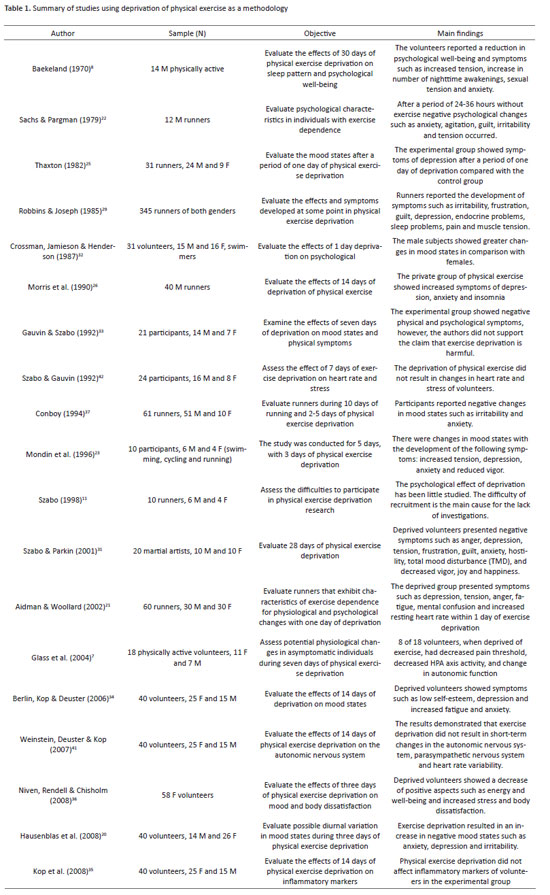
Table 1 lists the studies that observed symptoms and effects of exercise deprivation (see Table 1).
Body image disorders and deprivation of physical exercise
Psychiatric disorders related to the distortion of body image, such as eating disorders or muscle dysmorphia are often marked by a high degree of physical and mental suffering, and are associated with significant social and occupational harm.43 Anorexia nervosa and bulimia nervosa are the most widely known eating disorders, and in the first, the practice of physical exercise seems to represent an additional resource for the loss of body mass. In the case of bulimia nervosa, physical exercise compulsion is described as a potential compensatory behavior, helping to prevent body weight gain.44 The relationship between physical exercise and eating disorders, has been described in some studies, and excessive physical exercise is common among participants with eating disorders, being exclusively used as a tool for losing body mass and improving physical appearance.45,46
In the study by Mond et al, conducted on a sample of 3,472 women aged 18-42 years who performed exercise on a regular basis, it was observed that from the total sample, 322 women used exercise exclusively to control or decrease body mass, 136 women reported to feelings of guilt when they could not train and 116 women showed signs of eating disorders.47 However, as exercise is used solely as a tool to achieve the desired total body weight, deprivation or prevention to perform the exercise routine before the idealized body weight is achieved could contribute to the increase of obsessive-compulsive traits that already exist. However, the idealized body weight is achieved, the exercise may lose its purpose, leading to the hypothesis that individuals with body image disorder do not necessarily develop physical exercise compulsion.45,46
The motivation to be thin is so pronounced that it is possible that more than half of the teenagers may be on a diet program.48,49 In this context, 80% of girls with up to 18 years of age and normal BMI, reported a desire to lose body mass. Although most of the measures and behaviors to reduce the total body mass do not present major risks, their presence may cause significant medical and psychological risks associated with increased risk of subsequent eating disorders (anorexia and bulimia), which further corroborates the hyothesis.50 Female athletes are, thus, at greater risk of developing eating disorders than non-athlete women with the same age. The authors also suggest that the use of strenuous exercise with the intention of burning calories is the most commonly used way of controlling body mass by women, whether athletes or non-athletes.51
It seems quite reasonable that excessive physical exercise is an important aspect to the emergence of eating disorders, with approximately 80% of anorexia nervosa patients and 55% with bulimia nervosa engaging in compulsive physical exercise.52 Such data can be even more strengthened through other studies that also indicate a relationship between eating disorders and the use of exercise as a tool to maintain or decrease total body mass. In another study, Grave, Calugas, Marchesini, evaluated 165 women who had eating disorders and were hospitalized for treatment. The authors found that 39.4% of the participants were diagnosed with anorexia nervosa, 17.0% with bulimia nervosa, 43.6% were classified with an unspecified eating disorder and 45.5% had a compulsion to exercise. During 20 weeks of hospital treatment to which patients were submitted they could not perform physical exercise, and the authors observed at the end of the study an increase in the average body mass index (BMI), as well as a reduction in bulimic episodes and self induced vomiting. It is noteworthy that in this study 39 women did not complete treatment, indicating that body image problems and the inability to exercise may have contributed to the withdrawal of 23.6% of the sample.53
This concern with reducing body mass has been consistently associated the female gender, but this desire for thinness can already be observed in exercising males. Walker, Anderson & Hildebrandt, observed in a sample of 549 men that 63% wanted to reduce total body mass, in average, by 8.5kg.54 Besides the decrease of total body mass, males also appear to be associated with another psychiatric disorder called muscle dysmorphia. It is a subtype of body dysmorphic disorder that occurs despite large muscle hypertrophy, when men consider themselves small and weak.55 Muscle dysmorphia is a disorder present almost exclusively in men and that consists in a specific concern with body volume and the muscle development. The individual with muscle dysmorphia has a distorted body image, considering his muscles underdeveloped, despite evident muscle hypertrophy, which causes him to actively seek to increase muscle mass through excessive exercise and use of ergogenic substances and hyperproteic56 diets.
Compulsive exercise behavior is the strongest predictor for body satisfaction and social physical anxiety,57,58 and the compulsion seems to be reflected on the ideal body profile for men, which is on average 12.7 kg more muscular than the actual body.56 This relationship with the body is called a dysmorphic body disorder, where, instead of there being a pathological dissatisfaction with a part of the body, the individual is dissatisfied with the entire body. Individuals with muscle dysmorphia, despite being very muscular, believe they are less muscular than they seem. This belief causes the individual to become obsessed with exercise training, particularly strength training, often leading to the use of ergogenic substances such as anabolizing steroids.59
According to McFarland & Kaminski, the distortion of one's own image contributed to the emergence of symptoms such as increased anxiety, depression, interpersonal sensitivity and reduced self-esteem; in addition, the authors relate that anorexic and bulimic behaviors, obsessive-compulsive behaviors, interpersonal problems, and the use of ergogenic substances may be associated with symptoms of muscle dysmorphia, even when dissatisfaction with the body has been controlled.60
As the motivation to be thin can already be observed in both genders, there is a need to understand what motivates these individuals to use various resources to achieve the idealized weight. From this standpoint, the pressure of the media and the society in general in relation to an "ideal physique" has been consistently cast as the main villain in relation to the cult of an ideal body.
Fallon & Hausenblas, in their study, used a sample of 63 women who were divided into four groups (2 experimental and 2 control groups). The goal was to verify possible mood swings developed by contact with images of what might be regarded as "feminine physical ideal" and images considered "neutral", and to observe the role of acute aerobic exercise on this. In the experimental design of the study, both groups had contact with the images and answered questionnaires about their mood. The control group answered the questionnaires before and after exposure to the images, and the experimental group as well as having been exposed to the same images and answering the questionnaires, also held 30 minutes of aerobic exercise on a treadmill, filling the same instruments before and after the contact. Although no differences were found between the groups, the authors point out that when in contact with images related to the "physical ideal", the women showed symptoms of increased anger, depression and body dissatisfaction, suggesting that in the experimental group, exercise was not effective as a strategy to avoid changes in negative mood states, nor could it prevent the decrease of body image distortion of the volunteers. These results made the authors conclude that the problems of body image appear to greatly influence the changes observed in individuals who exercise in excess.61
Therefore, understanding the motivations for the practice of excessive exercise can help to understand how deprivation affects the psychosocial functioning of the individual with body image disorder, in addition, excessive exercise can be one of the indicating factor of individuals with body image disorder.19,46,57
Limitation of studies on the deprivation of physical exercise
The assessment of physical exercise dependence and therefore the effects of physical exercise deprivation can be done through qualitative measures (case studies, interviews) and quantitative (self-reported questionnaires that assess possible changes in behavior and mood disorders)6,22,62,63. However, even with the use of these measures, some authors point to the limitations of research methodologies.
On the deprivation of exercise, it is possible to list as limitation for the implementation of studies in this line, the lack of studies with primary dependent individuals (intrinsically motivated to perform physical exercise) and secondary (extrinsically motivated to perform physical exercise, being associated with eating and body image disorders),14,57 lack of control of possible diurnal mood variation during deprivation, difficulty in recruitment, the deprivation period to which the subjects will be exposed, the lack of deprivation studies with participants in their natural environment and the time of study.11,19 Moreover, the difficulty in recruiting volunteer participants hinders a better analysis of the effects of deprivation of physical exercise on physiological and psychological states, since the voluntary withdrawal of exercise would allow a more systematic investigation of the relationship between physical exercise and symptoms related exercise deprivation.9,11
Limitations such as these show how the design of studies on exercise deprivation is varied, making comparisons difficult between studies. For example, participants in the studies ranged between athletes and individuals who practiced regular exercise.19 Therefore, a further refinement of these scales and the development of more sensitive instruments are needed so that investigations can proceed in studies on exercise deprivation.24
CONCLUSION
According to the studies used in this review, we can conclude that exercise dependent individuals develop an uncontrollable and obsessive need to exercise, and that when prevented from performing this activity they develop several negative changes on physiological and psychological aspects. Similarly, individuals with body image disorder also face great difficulties during deprivation, since they use physical exercise to increase or lose of body volume in an attempt to reduce their physical and psychic suffering developed due to body image distortion.
In this context, it is important to note that psychological and physiological changes developed during physical exercise deprivation may appear after 24-48 hours of exercise deprivation, and that both men and women develop similar symptoms during physical exercise deprivation. Another important aspect found in the researches are the methodological limitations, such as the difficulty to recruit volunteers, the deprivation period, the use of dependent volunteers and the lack of control of circadian variables. The control of these variables will assist in the detection of how deprivation may influence psychosocial functioning.
Finally, we conclude on the basis of the studies in this review, that individuals with exercise dependence and/or body image disorders may develop behavioral changes, physiological changes and mood disorders during physical exercise deprivation.
Acknowledgments
The authors acknowledge the technical and financial support of AFIP, CEPE, CEMSA, FAPESP, CNPq, INSTITUTO DO SONO and FADA/UNIFESP.
REFERENCES
1. Warburton DER, Nicol CW, Bredin SSD. Health benefits of physical activity: the evidence. CMAJ 2006;174:801-09.
2. Pate RR, Pratt M, Blair SN, Haskell WL, Macera CA, Bouchard C. et al. Physical activity and public health: a recommendation from the Centers for Disease Control and Prevention and the American College of Sports Medicine. JAMA 1995;273:402-7.
3. Ibarzábal FA. Dependencia del ejercicio. Cuad. Med. Psicosom. Psiquiatr. Enlace 2004; Nº 71/72:24-32.
4. Hughes JR. Psychological effects of habitual aerobic exercise: a critical review. Prev. Med 1984;13:66-78.
5. Pope HG, Katz DL, Hudson JI. Anorexia nervosa and reverse anorexia among 108 male body-builders. Comprehensive Psychiatry 1993;34:406-09.
6. Hausenblas HA, Downs D. Exercise dependence: a systematic review. Psychol Sport Exerc 2002;3:89-123.
7. Glass JM, Lydenb AK, Petzke F, Steind P, Whalene G, Ambrose K, et al. The effect of brief exercise cessation on pain, fatigue, and mood symptom development in healthy, fit individuals. J Psychosom Res 2004;57:391-98.
8. Baekeland F. Exercise deprivation: sleep and psychological reactions. Arch Gen Psychiatry 1970;22:365-69.
9. Szabo A. The impact of exercise deprivation on well-being of habitual exercisers. Aust J Sci Med Sport.1995;27:68-75.
10. Adams J, Kirkby RJ. Excessive exercise as an addiction: A review. Addict Res Theory 2002;10:415-37.
11. Szabo A. Studying the psychological impact of exercise deprivation: Are experimental studies hopeless? J Sport Behav 1998;21:139-47.
12. West R, Gossop M. Overview: A comparison of withdrawal symptoms from different drug classes. Addiction 1994;89:1483-89.
13. American Psychiatric Association. Diagnostic and statistical manual of mental disorders. Washington, DC: APA, 1994.
14. Decoverley Veale DMW. Exercise dependence. Br J Addict 1987;82:735-40.
15. Hamer M, Karageorghis CI. Psychobiological Mechanisms of Exercise Dependence. Sports Med 2007;37:477-84.
16. Antunes HKM, Andersen ML, Tufik S, De Mello MT. O estresse físico e a dependência de exercício físico. Rev. Bras. Med. Esporte 2006;12:234-38.
17. Rosa DA, De Mello MT, Negrão AB, Souza-Formigoni MLO. Mood Changes After Maximal Exercise Testing in Subjects With Symptoms of Exercise Dependence. Percept Mot Skills 2004;99:341-53.
18. Glasser W. Positive addiction. New York: Harper & Row; 1976.
19. Morgan WP. Negative addiction in runners. Phys Sports Med 1979;7:56-63.
20. Hausenblas HA, Gauvin L, Downs DS, Duley AR. Effects of abstinence from habitual involvement in regular exercise on feeling states: An ecological momentary assessment study. Br J Health Psychol 2008;13:237-55.
21. Aidman E, Woollard S. The Influence of Self-reported Exercise Addiction on Acute Emotional and Physiological Responses to Brief Exercise Deprivation. J Sport Exerc Psychol 2002;4:225-36.
22. Sachs M, Pargman D. Running addiction: a depth interview examination. J Sport Behav 1979;2:143-55.
23. Mondin GW, Morgan WP, Piering PN, et al. Psychological consequences of exercise deprivation in habitual exercisers. Med. Sci. Sports. Exerc 1996;28:1199-03.
24. Adams J, Kirkby RJ. Exercise dependence: A review of its manifestation, theory and measurement. Sports Med Train Rehabil 1998;8:265-76.
25. Thaxton L. Physiological and psychological effects of short-term exercise addiction on habitual runners. J. Sport Psychol 1982;4:73-80.
26. Morris M, Steinberg H, Sykes EA, Salmon P. Effects of temporary withdrawal from regular running. J.Psychosom Res 1990;34:493-00.
27. Tompkins S. A modified model of smoking behavior. In Borgatta EF, Evans RR. (Eds.), Smoking, health and behavior. Chicago: Aldine. 1968.
28. Leventhal H, Cleary PD. The smoking problem: A review of the research and theory in behavioral risk modification. Psychological Bulletin 1980;88:370-05.
29. Robbins JM, Joseph P. Experiencing Exercise Withdrawal: Possible Consequences of Therapeutic and Mastery Running. Journal of Sport Psychology 1985;7:23-39.
30. Anshel MH. A psycho-behavioral analysis of addicted versus non-addicted male and female exercisers. J Sport Behav 1991;14:145-58.
31. Szabo A, Parkin AM. The psychological impact of training deprivation in martial artists. Psychology of Sport and Exercise 2001;2:187-99.
32. Crossman J, Jamieson J, Henderson L. Responses of competitive athletes to layoffs in training: exercise addiction or psychological relief? J Sport Behav 1987;10:28-38.
33. Gauvin L, Szabo A. Application of the experience sampling method to the study of the effects of exercise withdrawal on well-being. J Sport Exerc Psychol 1992;14:361-74.
34. Berlin AA, Kop WJ, Deuster PA. Depressive mood symptoms and fatigue after exercise withdrawal: the potential role of decreased fitness. Psychosom Med 2006;68:224-30.
35. Kop WJ, Weinstein AA, Deuster PA, Whittaker KS, Tracy RP. Inflammatory markers and negative mood symptoms following exercise withdrawal. Brain Behav Immun 2008;9:1190-96.
36. Niven A, Rendell E, Chisholm L. Effects of 72-h of exercise abstinence on affect and body dissatisfaction in healthy female regular exercisers. J Sports Sci 2008;26:1235-42.
37. Conboy JK. The Effects of Exercise Withdrawal On Mood States In Runners. J Sport Behav 1994;17:188-03.
38. Luger A, Deuster PA, Kyle SB, Gallucci WT, Montgomery LC, Gold PW, et al. Acute hypothalamic - pitutitary - adrenal response to the stress of treadmill exercise: physiological adaptations to physical training. N Engl J Med 1987;316:1309-15.
39. Granges G, Littlejohn GO. A comparative study of clinical signs in fibromyalgia/fibrositis syndrome, healthy and exercising subjects. J Rheumatol 1993;20:344-51.
40. Petrides JS, Mueller GP, Chrousos G, Kalogeras K, Deuster PA. Exercise-induced activation of the hypothalamic - pituitary - adrenal (HPA) axis: differential sensitivity to glucocorticoid suppression. J Clin Endocrinol Metab 1994;79:377-83.
41. Weinstein AA, Deuster PA, Kop WJ. Heart Rate Variability as a Predictor of Negative Mood Symptoms Induced by Exercise Withdrawal. Med Sci Sports Exerc 2007;39:735-41.
42. Szabo A, Gauvin L. Reactivity to written mental arithmetic: Effects of exercise lay-off and habituation. Physiol Behav 1992;51:501-06.
43. American Psychiatric Association. Diagnostic and Statistical Manual of Mental Disorders. Washington, DC: APA, 1997.
44. Cook BJ, Hausenblas HA. Behavior and Eating Pathology: Mediator or Moderator?. J Health Psychol 2008;13:495-02.
45. Mond JM, Calogero RM. Excessive exercise in eating disorder patients and in healthy women. Aust N Z J Psychiatry 2009;43:227-34.
46. Mond JM, Myers TC, Crosby R, Hay P, Mitchell J. 'Excessive Exercise' and Eating-Disordered Behaviour in Young Adult Women: Further Evidence from a Primary Care Sample. Eur. Eat. Disorders. Rev 2008;16:215-21.
47. Mond JM, PJ Hay, Rodgers B, Owen C. An Update on the Definition of "Excessive Exercise" in Eating Disorders Research. Int J Eat Disord 2006;39:147-153.
48. McCreary DR, Sasse DK. An Exploration of the Drive for Muscularity in Adolescent Boys and Girls. J Am Coll Health 2000;4:297-04.
49. McCreary DR, Sasse DK, Saucier DM, Dorsch KD. Measuring the drive for Muscularity: Factorial Validity of the Drive for Muscularity Scale in Men and Women. Psychology of Men & Masculinity 2004;5:49-58.
50. Jones JM, Bennett S, Olmsted MP, Lawson ML. & Rodin G. Disordered eating attitudes and behaviours in teenaged girls: a school-based study CMAJ 2001;165:547-52.
51. McNulty KY, Adams CH, Andersen JM, Afentino SG. Development and validation of a screening tool to identify eating disorders in female athletes. J Am Diet Assoc 2001;101:886-92.
52. Peñas-Lledó E, Leal FJ, Waller G. Excessive Exercise in Anorexia Nervosa and Bulimia Nervosa: Relation to Eating Characteristics and General Psychopathology. Int J Eat Disord 2002;31:370-75.
53. Grave RD, Calugi S, Marchesini G. Compulsive exercise to control shape or weight in eating disorders: prevalence, associated features, and treatment outcome. Compr Psychiatry 2008;49:346-352.
54. Walker DC, DA Anderson, Hildebrandt T. Body checking behaviors in men. Body Image 2009;6:164-170.
55. Assunção SSM. Dismorfia muscular. Rev Bras Psiquiatr 2002;24:80-4.
56. Sardinha A, Oliveira AJ, Araújo CGS. Dismorfia Muscular: Análise comparativa entre um critério antropométrico e um instrumento psicológico. Rev. Bras. Méd. Esporte 2008;14:387-92.
57. Hausenblas HA, Downs DS. Relationship Among Sex, imagery, and Exercise Dependence Symptoms. Psychol Addict Behav 2002;16:169-72.
58. Hildebrandt T, Langenbucher J & Schlundt DG . Muscularity concerns among men: development of attitudinal and perceptual measures. Body Image 2004;1:169-81.
59. Choi PYL, Pope HG, Olivardia R. Muscle dysmorphia: a new syndrome in weightlifters. Br J Sports Med 2002;36:375-77.
60. McFarland MB, Kaminski PL. Men, muscles, and mood: The relationship between self-concept, dysphoria, and body image disturbances. Eat behav 2009;10:68-70.
61. Fallon EA, Hausenblas HA. Media images of the "ideal" female body: Can acute exercise moderate their psychological impact?. Body Image 2005;2:62-73.
62. Sacks ML. Running addiction: A clinical report. In. Sachs MH, Sacks ML. Psychology of running. Champaign, IL: Human Kinetics. 1981.
63. Adams J, Kirkby R. Exercise dependence: A problem for sports physiotherapists. Aust J Physiother 1997;43:53-58.
1. PhD Professor. 2. Specialist, Student. 3. Post-doctorate, Professor, Universidade Federal de São Paulo, UNIFESP, Centro de Estudos em Psicobiologia e Exercício Center for Psychobiology and Exercise Studies)
Correspondence: R: Professor Francisco de Castro, 93 Vila Clementino São Paulo Brazil. São Paulo SP - Zip Code: 04020050 Phone / Fax: +55 11 55720177 Email: hanna.karen@unifesp.br
This article was submitted to SGP (Publication Management System) of Rev Bras Cien Med Health on November 3, 2009. Cod. 46. Accepted on March 26, 2010. Financial support: The authors acknowledge the technical and financial support of AFIP, CEPE, CEMSA, CEPIDSONO/FAPESP (process number: 1998/143033) CNPq, INSTITUTO DO SONO and FADA/UNIFESP.